


175 Soldiers killed in 10 years by Maoist
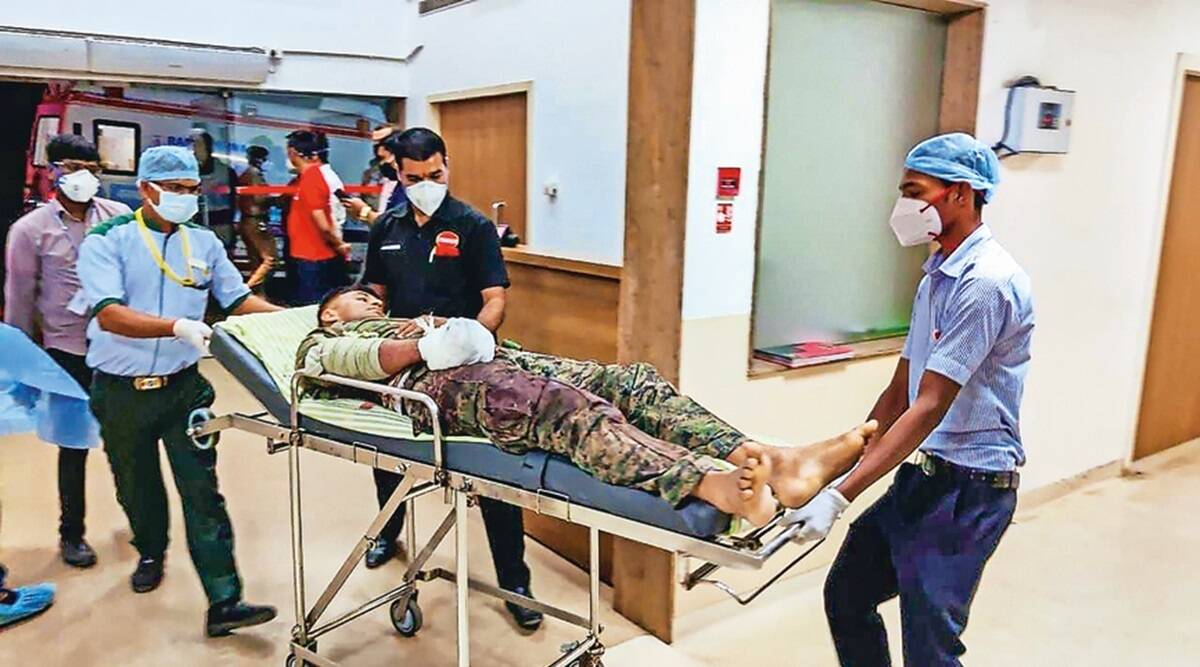
Since the 2010 Chintalnar massacre, the Dantewada-Sukma-Bijapur axis has claimed the lives of more than 175 members of the security forces, in addition to several civilians. While 76 CRPF men were killed in the Chintalnar encounter, the last encounter in Bijapur on Saturday resulted in the death of 22 security personnel.
A look at the data on Maoist violence in Chhattisgarh shows that most of the attacks and victims occurred between March and July. Sources say this is because the PCI (Maoist) usually launches its tactical counter-offensive campaign between February and the end of June. This campaign involves aggressive military operations against security forces before monsoons, which hinder movement, hit the region.
The main concern is that security forces continue to fight in this region, known as Bastar, despite the campaign against left-wing extremists that began some 15 years ago.
A number of factors – remoteness, jungle terrain, lack of administration, and lack of political will – have been blamed for slow progress there.
Security system sources say that the eradication of the movement in neighboring Andhra Pradesh and Odisha has led to a concentration of cadres and leaders in the Bastar region, facilitating the movement of rebels across borders due to their proximity. with other states.
However, most point to the absence of roads, communications and proper administration as the main reason why the Maoists continue to occupy the area. Some also note that the Chhattisgarh police have been “reluctant” over the years to take the lead in the fight.
“Take any state where this problem has arisen, be it Andhra Pradesh, Telangana or West Bengal, it has happened because the state government and state police have recognized it as their problem from start to finish. In West Bengal, most of the information was generated by the local police and handed over to the central forces, which then carried out the operation with the state police. Even in Jharkhand, the kind of support the local police provide is phenomenal. So you are very successful there despite some very difficult terrain, ”said a former CRPF CEO who requested anonymity. He also added that Chhattisgarh was easier to operate than other states, in terms of terrain.
The key problem pointed out by many is that the road network is almost “non-existent” in the central Maoist area of Chhattisgarh. “Even Bihar and Jharkhand have much better road networks in seedbeds. The communication networks are also better, ”said a CRPF official on duty.
Another former director general of the CRPF considered the campaign of the Salwa-Judum militias to be counterproductive. “He divided the villages into camps. Those who were part of the campaign started living in camps with the security forces while pushing others into Maoist arms, ”he said.
Some sources also referred to the District Reserve Guard, which the CRPF helped train and nurture. “The idea was that DRG would take the lead and CRPF would play the supporting role. But CRPF remains the spearhead to date in Chhattisgarh, ”said one officer, suggesting that the involvement of the local police was less than satisfactory, even if it was improving.
A CRPF official said that the political will of the state was of the utmost importance. In Andhra and Telangana, at the height of the problem, the government had created an Inland and Remote Area Development Authority. It would coordinate all government plans for the development of these regions in a coherent manner.
“Even in West Bengal, hospitals and bridges were built in Maoist areas, local people were given jobs. It has happened in part in Chhattisgarh with the uprising of the Bastariya Battalions. But in the Maoist areas of Chhattisgarh, roads, schools, hospitals and infrastructure for the marketing of forest products must emerge, ”said this official. “The day the administration reaches these areas, the LWE problem will be over in three years.”
The sources said that operations in Chhattisgarh also tend to be more complicated as the contingent of security forces tends to be larger than in other states.
“Lately, joint operations have increased and the local police have become more proactive in Chhattisgarh, but given a large number of forces in the state, the forces constantly need to practice joint operations. Otherwise, at the critical moment, there will be command confusion, coordination will suffer and casualties will occur, ”said another former director-general of the CRPF.
The importance of the administration reaching remote areas has even been recognized by the Interior Ministry in a document on LWE violence.
“Over the years, the Maoists have managed to entrench themselves in remote and inaccessible tribal hotspots in a few states. Consequently, state governance institutions also gradually withdrew from those areas, resulting in a security and development vacuum. This suited the Maoists, who have established some kind of rudimentary parallel administration system in these areas, ”the document says.
.

She is a freelance blogger, writer, and speaker, and writes for various entertainment magazines.