


A decade after Japans 2011 earthquake, many still hope for recovery from trauma
By Mari Yamaguchi and Haruka Nuga
Ten years after Japan’s earthquake, tsunami and nuclear disaster, the lives of many of those who survived remain on hold.
On March 11, 2011, one of the largest tremors on record triggered a massive tsunami, killing more than 18,000 people and causing catastrophic catastrophes at the Fukushima Daiichi nuclear plant. Almost half a million people were displaced. Tens of thousands have yet to return home.
So far, more than 30 trillion yen ($ 280 billion) has been spent on reconstruction, but even Reconstruction Minister Katsuei Hirasawa recently acknowledged that while the government has moved ahead with the construction of new buildings, it has invested less in helping people rebuild their lives. for example, offering trauma mental health services.
The Associated Press spoke with people affected by disasters about how far they have come and how much more remains to be done.
***
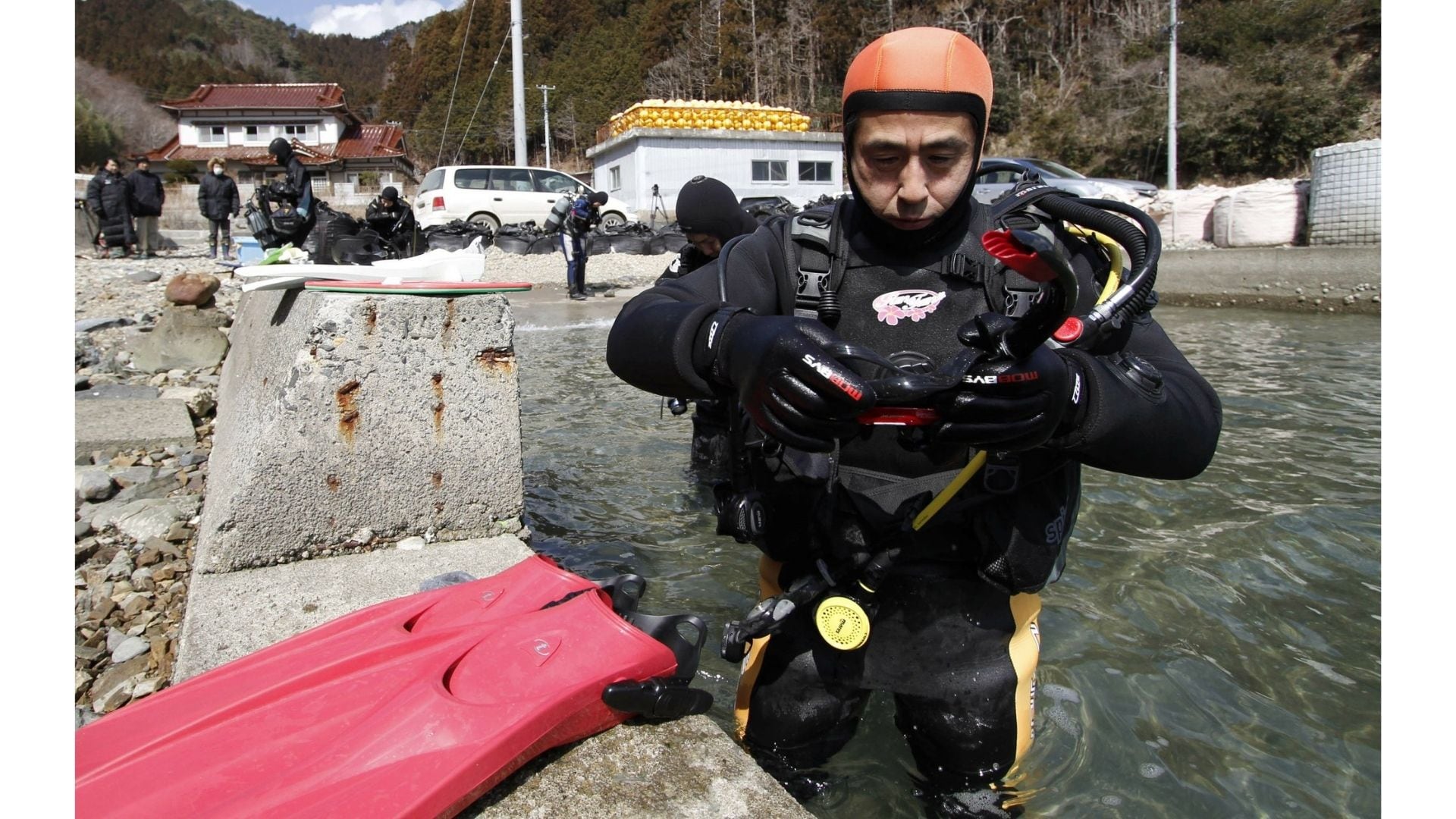
Above: Yasuo Takamatsu prepares for a diving lesson in Takenoura Bay, Miyagi Prefecture, northern Japan. Photo via The Associated Press / Koji Ueda.
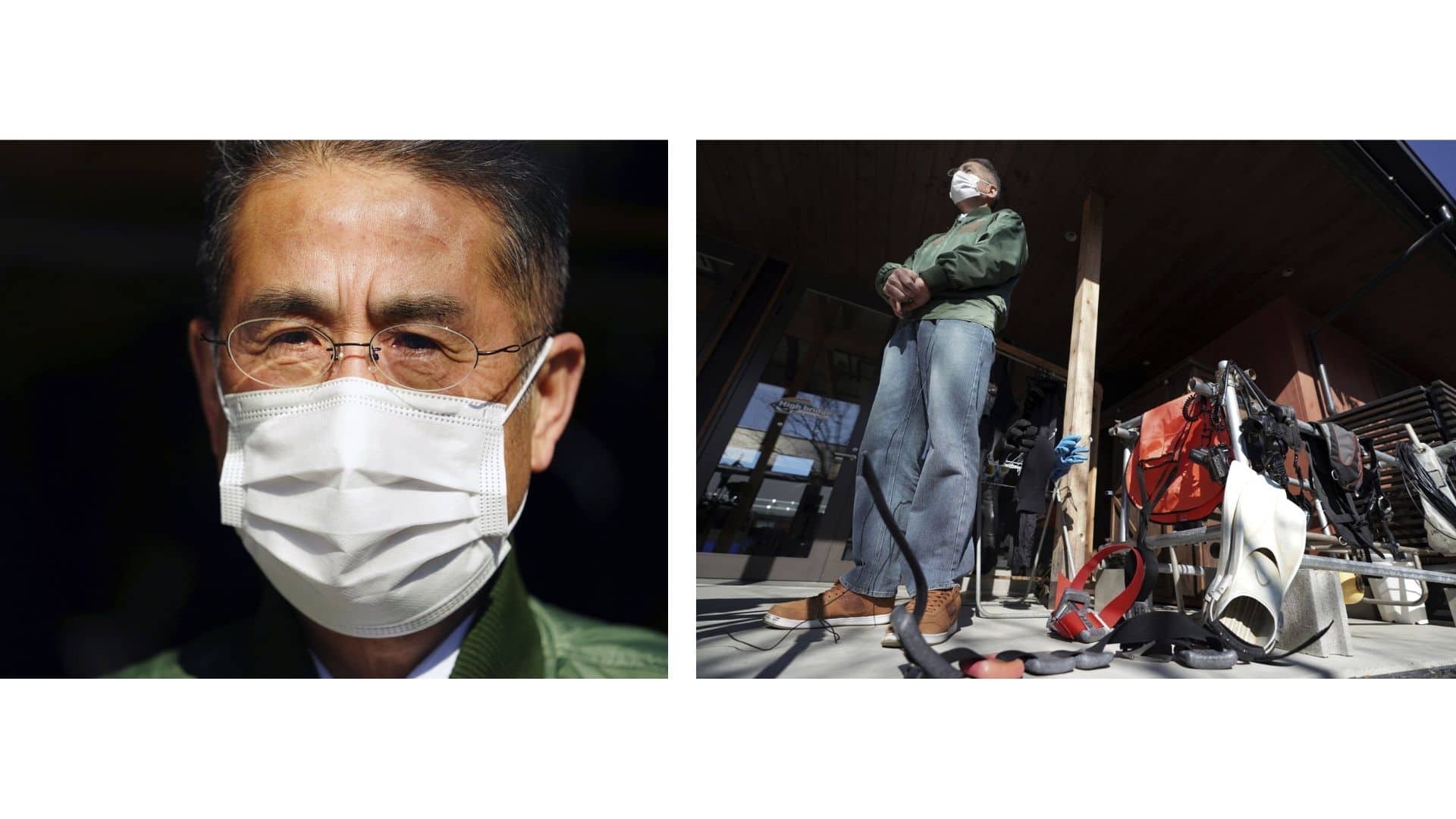
Above: Yasuo Takamatsu speaks to The Associated Press in Onagawa, Miyagi Prefecture, northern Japan, Monday, March 8, 2021. Photo via The Associated Press / Eugene Hoshiko
“As long as my body moves”
Yasuo Takamatsu, 64, lost his wife, Yuko, when the tsunami hit Onagawa in Miyagi Prefecture.
He’s been looking for her ever since.
He even got his diving license to try and find his remains, and for seven years he has been diving weekly – 470 and counting.
“I’m always thinking that she may be somewhere close,” he said.
In addition to his solo dives, once a month he joins local authorities to conduct underwater searches of some 2,500 people whose remains are not yet known throughout the region.
Takamatsu said the city’s scars have largely healed, “but the recovery of people’s hearts … will take time.”
So far, he has found albums, clothing and other artifacts, but nothing that belonged to his wife.
He said he will keep looking for his wife “as long as my body moves.”
“In the last text message he sent me, he said, ‘Are you okay? I want to go home, ‘”he said. “I’m sure he still wants to go home.”
***
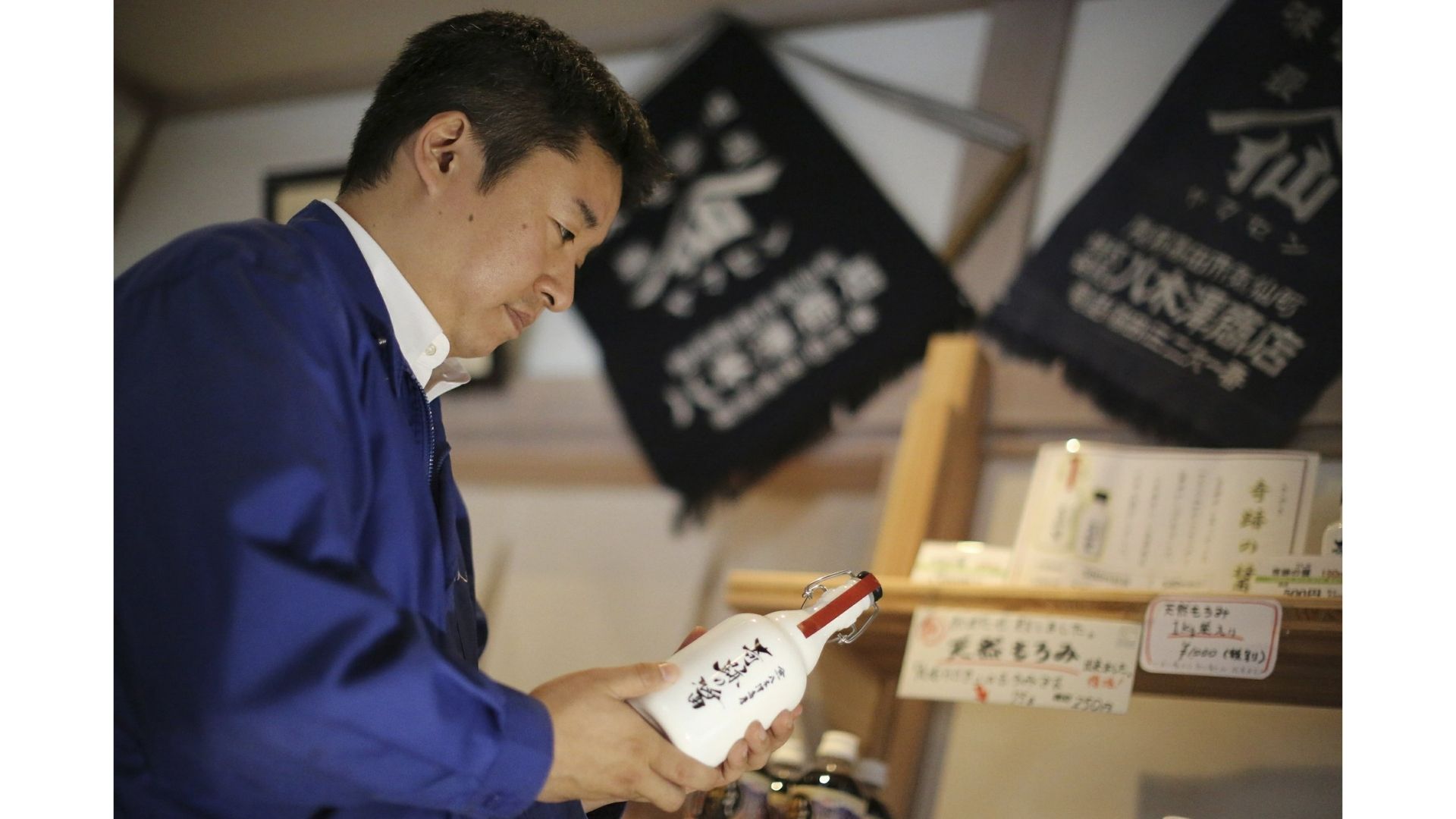
Above: Michihiro Kono, president of Yagisawa Shoten Co, holds his company’s bottle of soy sauce, called “the miracle,” at his company’s new headquarters in Rikuzentakata, Iwate prefecture, northeast Japan, in 2015. Photo via The Associated Press / Eugene Hoshiko
“Starting line again”
Just a month after a tsunami of up to 17 meters (55 feet) crashed into the city of Rikuzentakata, Michihiro Kono took over his family’s soy sauce business.
That he was able to continue the business of two centuries is a miracle, he says. The precious soy yeast was only saved because it had donated some to a university lab.
For the past decade, Kono has worked to rebuild the business in Iwate Prefecture, and later this year he will finish building a new factory, replacing the one that was destroyed, on the same land where his family started making soy sauce. in 1807. It has even released a soy sauce called “Miracle” in honor of the saved yeast.
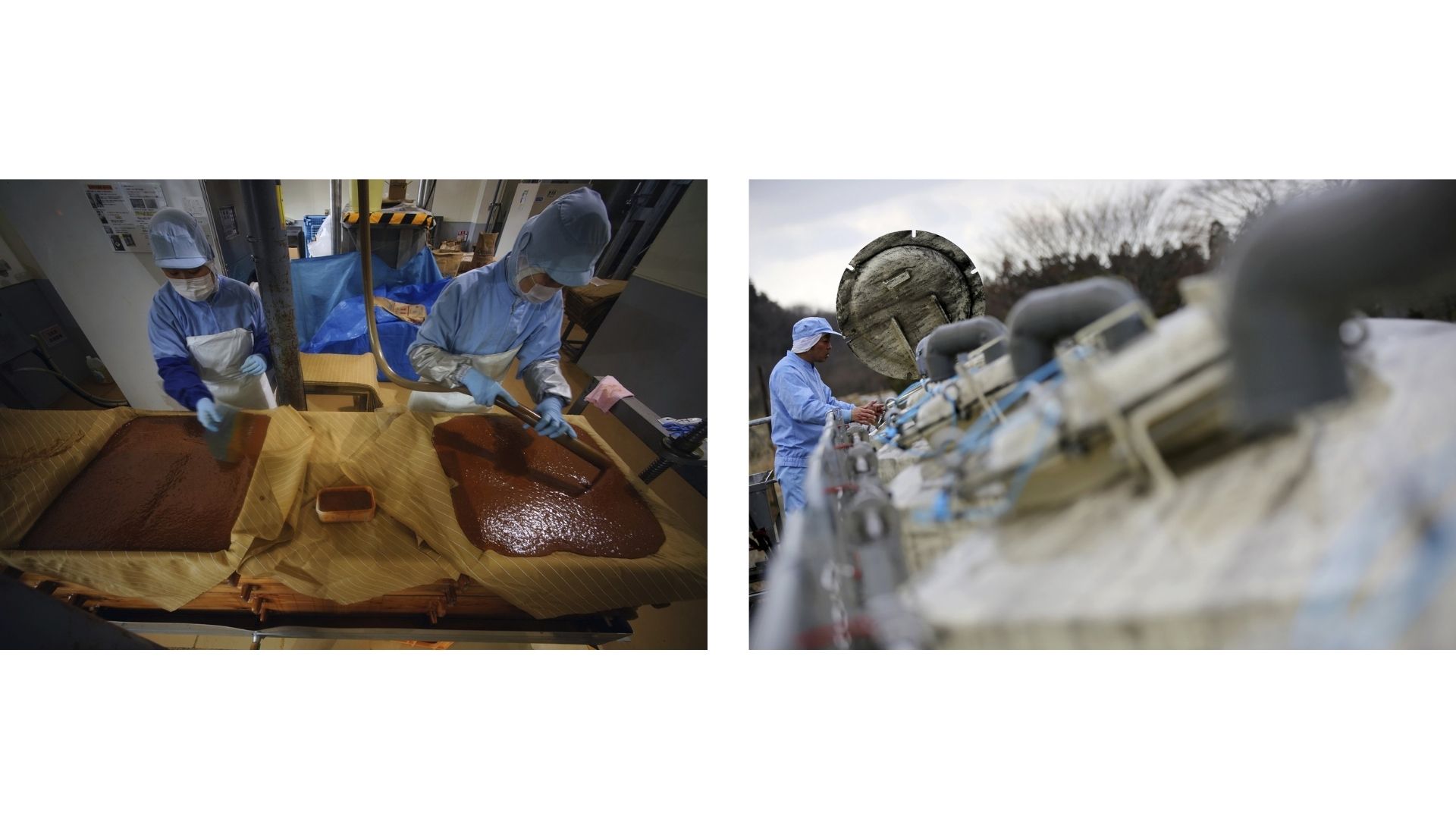
Above: (LEFT) Yagisawa Shoten Co workers prepare for the soy sauce extractor at the company’s factory in Ichinoseki, Iwate Prefecture, northeast Japan, Friday, March 5, 2021. Photo via The Associated Press / Eugene Hoshiko (RIGHT) A Yagisawa Shoten Co. worker checks soy sauce tanks at the company’s new factory in Ichinoseki, Iwate prefecture, northeastern Japan, in 2015. Photo via The Associated Press / Eugene Hoshiko
“This is a critical time to see if I can do something meaningful in the next 10 years,” said the 9th generation owner of Yagisawa Shoten Co. “I was born here and now I’m back on the starting line.”
But challenges remain: Their customer base has been decimated. The city’s population has plummeted more than 20 percent to around 18,000, so it is trying to build commercial networks beyond the city.
Kono often thinks of the people killed by the tsunami, with many of whom he used to discuss revitalization plans for the city.
“All those people wanted to make a great city, and I want to do things that make them say, ‘Well done, you did it,’ when I see them again in the next life,” he said.
***
“Who wants to go back?”
About 10 kilometers (6 miles) south of the destroyed nuclear plant, rice farmer Naoto Matsumura defied a government evacuation order a decade ago and stayed on his farm to protect his land and livestock abandoned by neighbors.
He is still there.
Most of the city of Tomioka reopened in 2017. But dozens of neighboring houses around Matsumura are still empty, leaving the area completely dark at night.
The main railway station in the city of Fukushima Prefecture was renovated. A new shopping center was built. But less than 10 percent of Tomioka’s 16,000 residents have returned after massive amounts of radioactive material dumped from the plant forced evacuations from the city and other nearby areas. Parts of the city remain off-limits; houses and shops are abandoned.
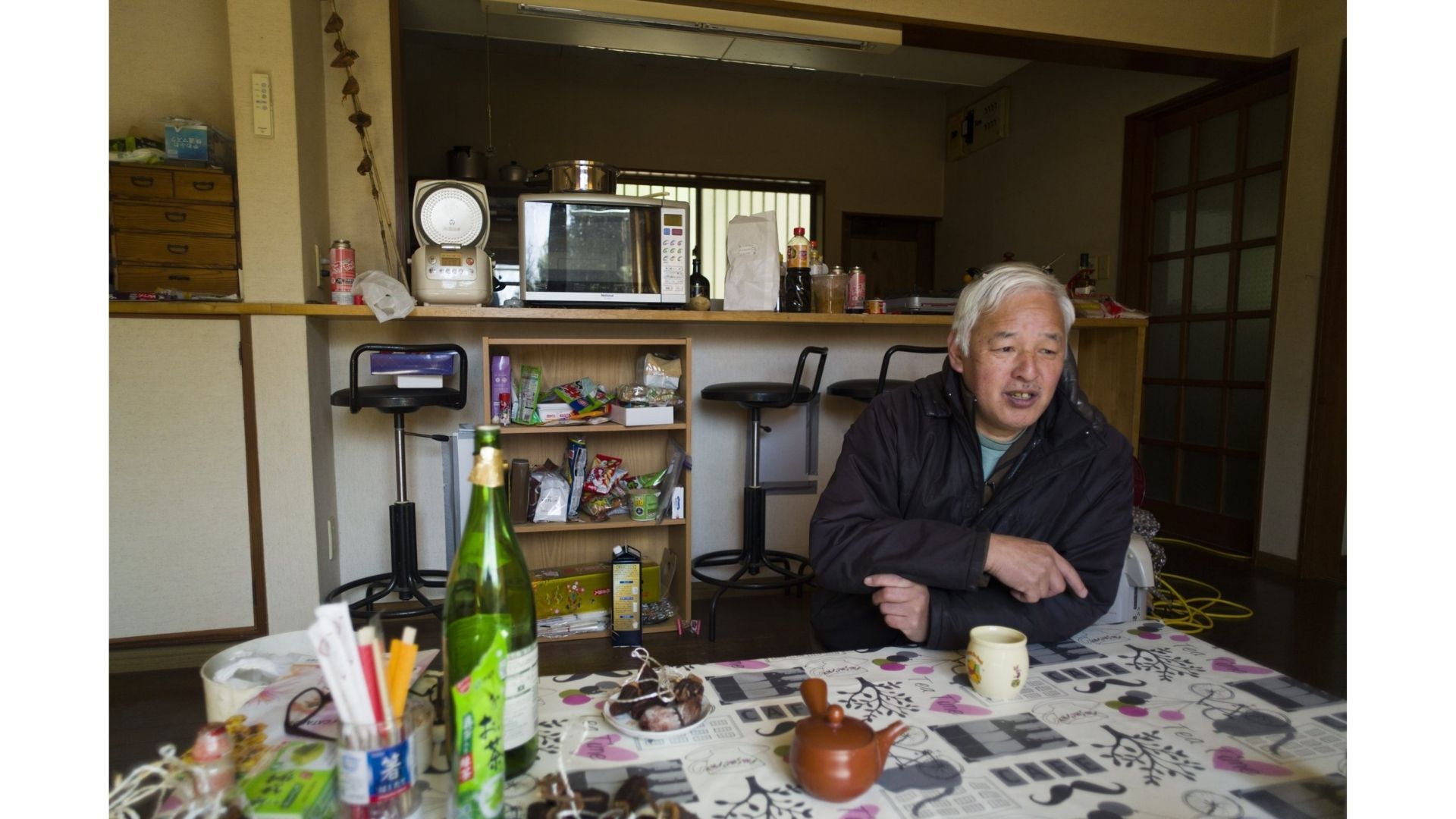
Above: Naoto Matsumura speaks during an interview with The Associated Press at his home in Tomioka City, Fukushima Prefecture, northeastern Japan, on Sunday, February 28, 2021. Photo via The Associated Press / Hiro Komae
“It took hundreds of years of history and effort to build this city, and it was instantly destroyed,” he said. “I grew up here … but this doesn’t look like home at all anymore.”
Because it took six years to lift the evacuation order, many residents have already found jobs and homes elsewhere. Half of former residents say they have decided never to return, according to a city survey.
This has been the case throughout the region.
In Tomioka, radioactive waste from decontamination efforts in the city is still stored in a prohibited area.
“Who wants to go back to a place like this?” Matsumura asked. “I don’t see much of a future for this city.”
For company, Matsumura has several cows, a pony, and a family of hunting dogs that help him drive away wild boars. The cows are descendants of those on neighboring farms that he has kept, in protest, after the government issued an order to destroy thousands for fear of radiation.
This spring, for the first time since the disaster, the 62-year-old farmer plans an experimental rice planting and expand his beekeeping efforts.
“I will stay here until the end of my life,” he said.
***
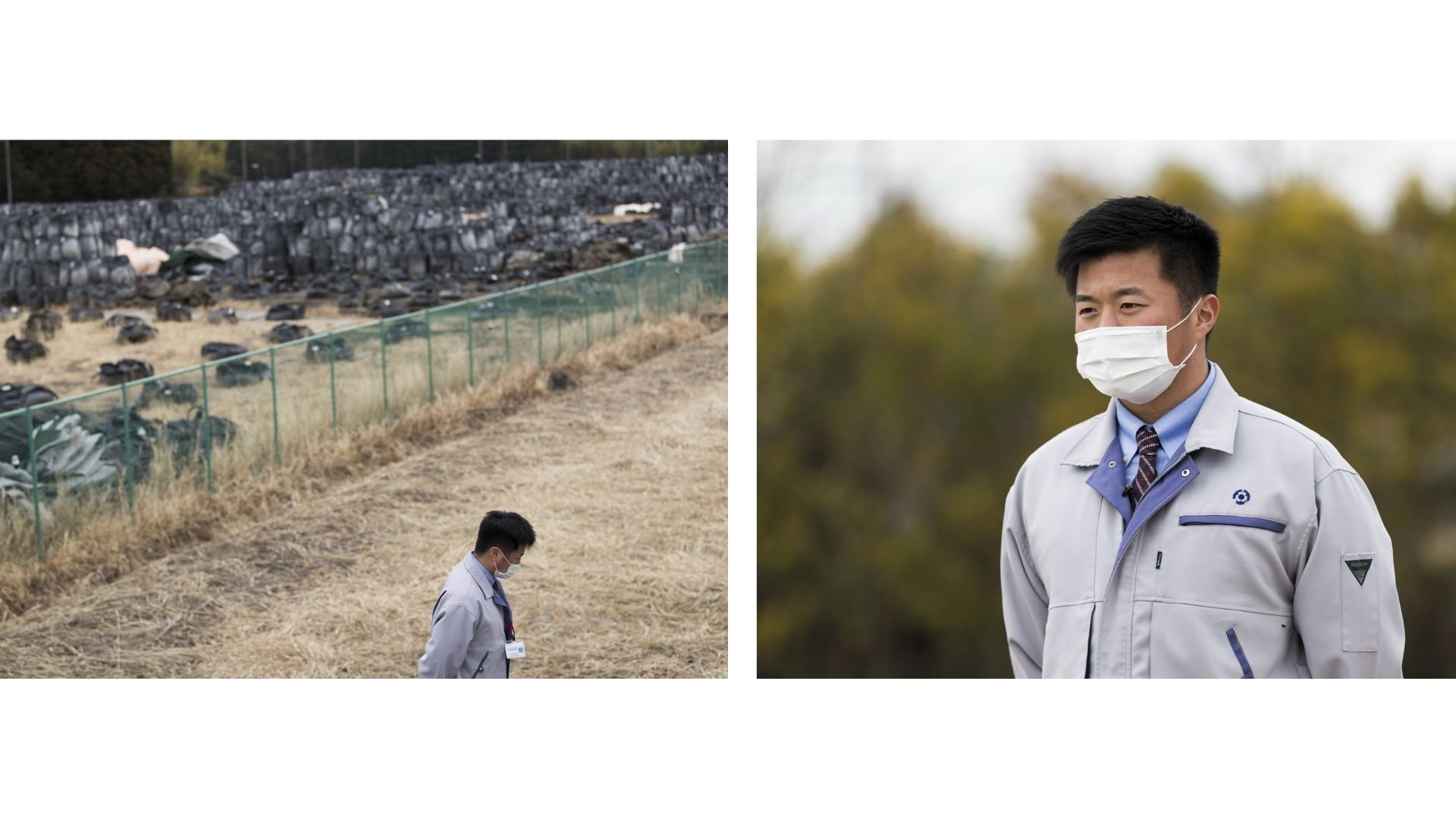
Above: Yuya Hatakeyama, a Tomioka city official, walks past a temporary storage site for bags of soil containing possible radioactive waste during an interview with The Associated Press as he guides reporters through a “hard-to-return” area in the Tomioka city, Fukushima. prefecture, northeast Japan, Friday, February 26, 2021. Photo via The Associated Press / Hiro Komae
“Your home is still here”
Yuya Hatakeyama was 14 years old when he was forced to evacuate Tomioka after the disaster.
Now 24, the former third baseman for Fukushima Red Hopes, a regional professional league team, is in his first year working for Tomioka City Hall, but has yet to return to live in the city, joining the many who they commute to the city daily. from outside.
Hatakeyama has bittersweet memories of Tomioka. The area that is now a no-go zone includes Yonomori Park, where people used to gather for a cherry blossom festival. Decontamination work in the area is intensifying and the city plans to lift the rest of the exclusion zone in 2023.
“I want to reach out to residents, especially the younger generation, so they know that their home is still here,” Hatakeyama said. One day, he said, he wants to see young families playing ball, as he used to do with his father.
***
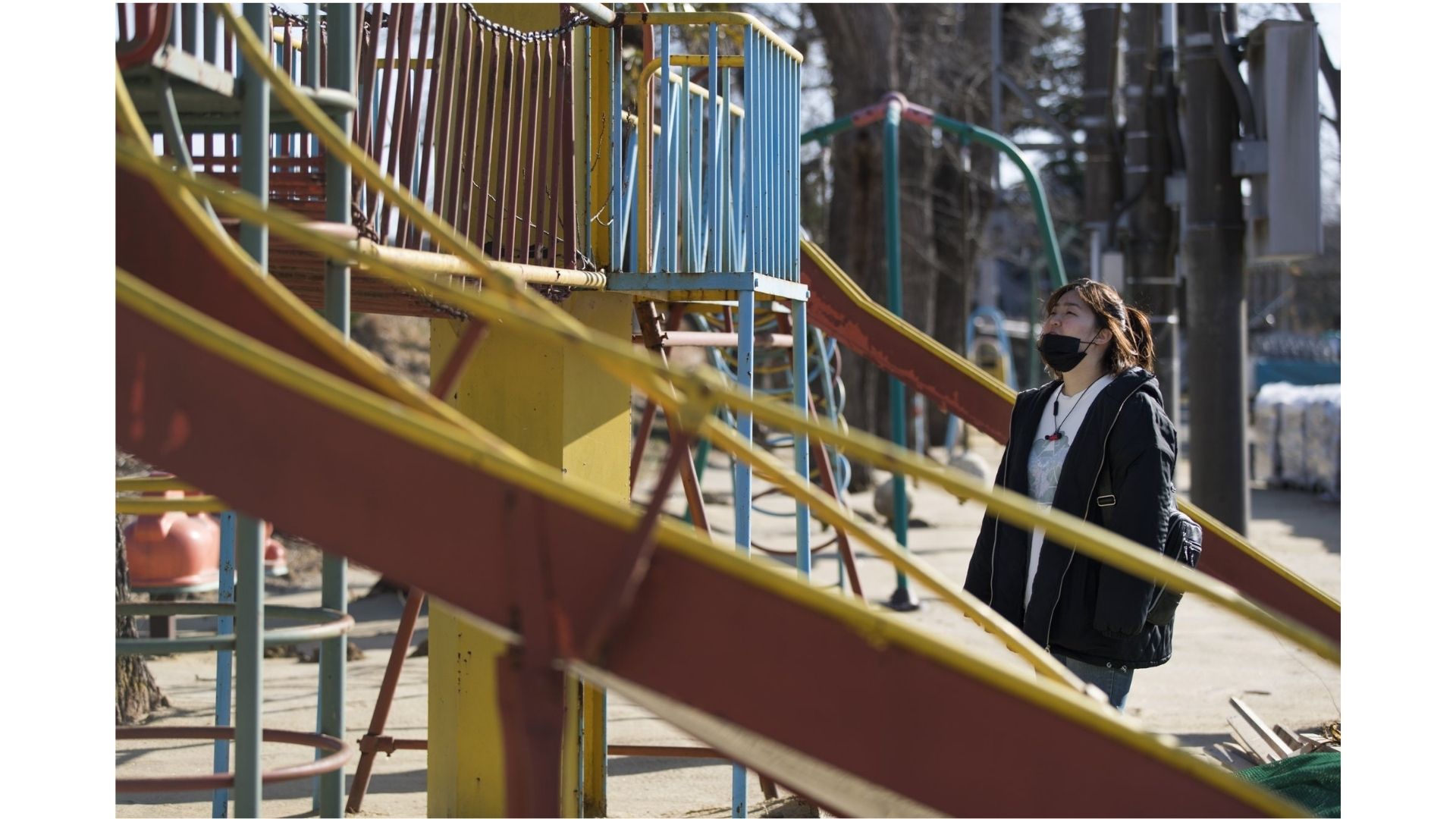
Above: Hazuki Sato, a Futaba city official, visits a playground where she used to play daily until she was evacuated due to a nuclear scare after the 2011 earthquake, during an interview with The Associated Press in the city of Futaba , Fukushima prefecture, northeast Japan, on Sunday. , February 28, 2021. Photo via The Associated Press / Hiro Komae
“A place of comfort”
Hazuki Sato was 10 years old when she fled her elementary school in Futaba, home of the destroyed nuclear plant.
Now he is preparing for the typical Japanese coming-of-age ceremony in their 20s, hoping to reunite in the city so he can reconnect with his former classmates who have dispersed.
Despite the horrible memories of escaping from her classroom, she still considers Futaba her home.
After studying outside the region for eight years, Sato now works for his hometown, albeit from an office in Iwaki, another city in Fukushima prefecture.
None of Futaba’s 5,700 residents can return to live there until 2022, when the city is expected to partially reopen. An area outside a train station reopened last March just for a daytime visit to bring in the Olympic torch.
Sato has fond memories of Futaba: a family barbecue, riding a unicycle after school, and doing homework and snacking with friends at daycare while waiting for her grandmother to pick her up.
“I want this city to become a comforting place again,” he said.
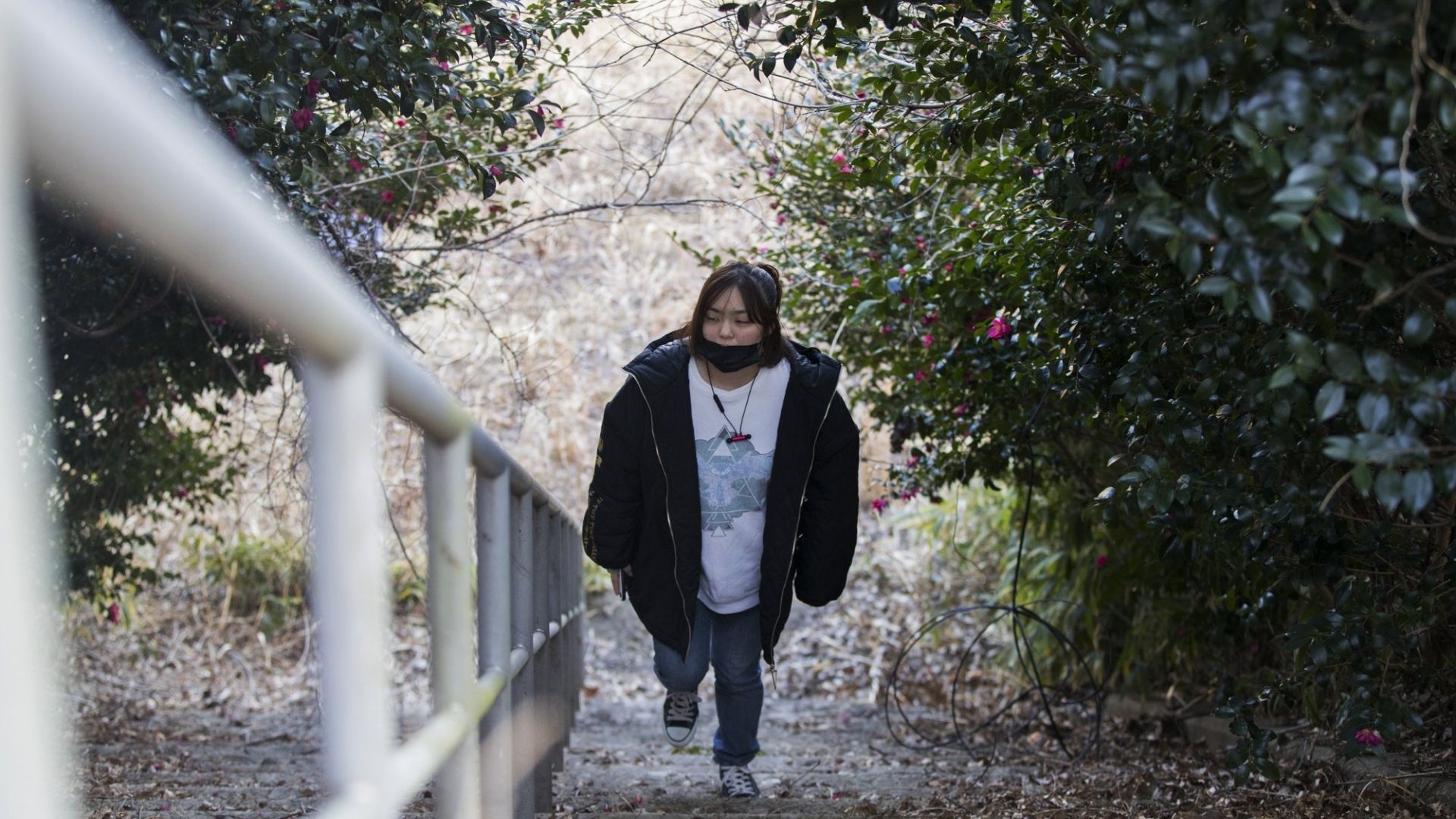
Above: Hazuki Sato, a Futaba city official, walks around an elementary school she used to attend until it was evacuated due to a nuclear scare after the 2011 earthquake, during an interview with The Associated Press in the city of Futaba, Fukushima prefecture, northeast Japan, on Sunday, February 28, 2021. Photo via The Associated Press / Hiro Komae
***
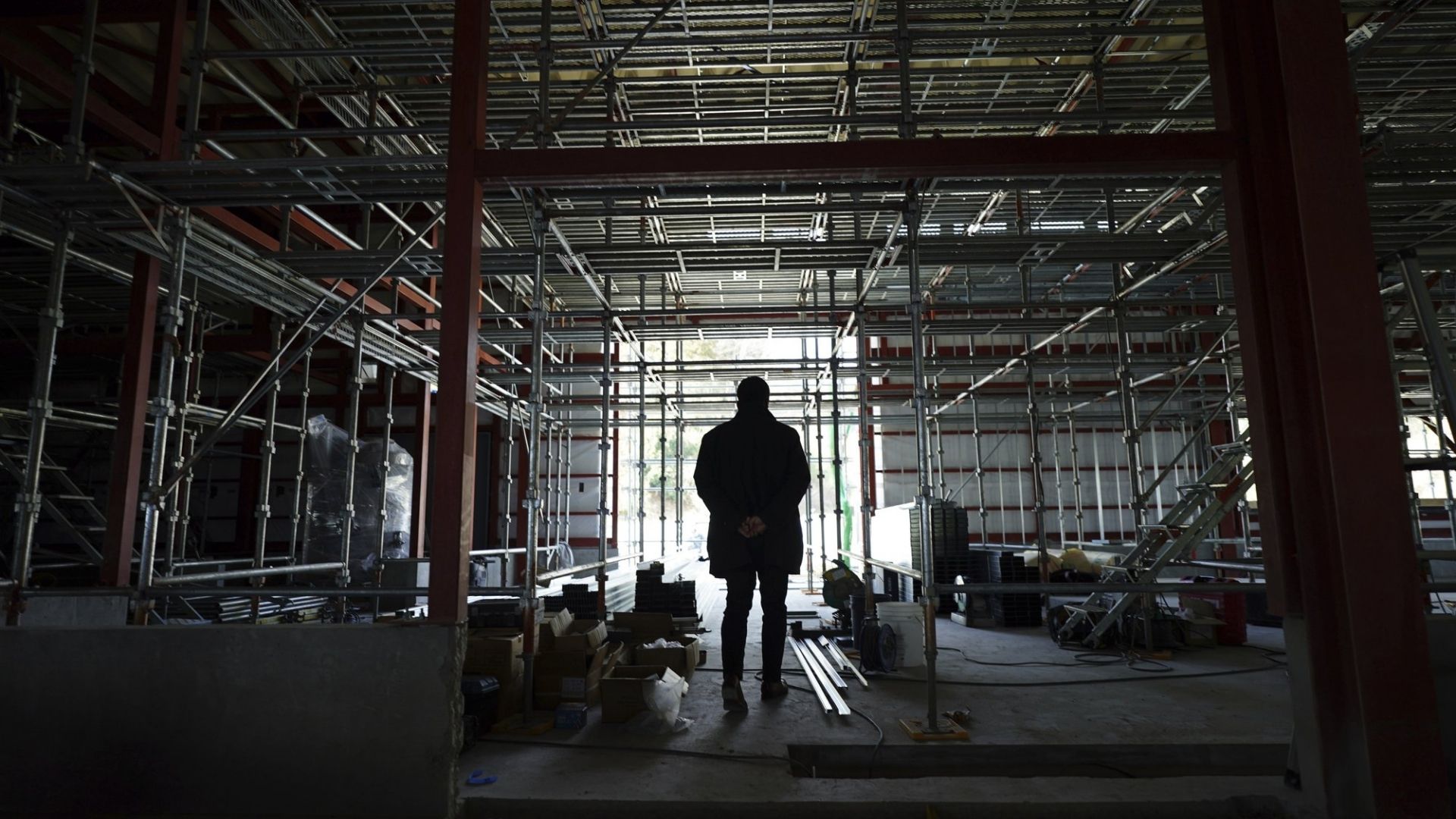
Bleed Image: Michihiro Kono, President of Yagisawa Shoten Co, is at his factory under construction on Friday, March 5, 2021, in Rikuzentakata, Iwate Prefecture, northern Japan. Just a month after a tsunami of up to 17 meters (55 feet) crashed into the city of Rikuzentakata, soy sauce maker Kono inherited his family’s two-century business from his father. Later this year, the 9th generation owner of Yagisawa Shoten Co. will open a new factory on the same land where his family started making soy sauce in 1807. Photo via The Associated Press / Eugene Hoshiko

She is a freelance blogger, writer, and speaker, and writes for various entertainment magazines.