



The Pulwama terror attack had led to the martyrdom of 40 Indian soldiers
A ‘black day’ in Indian history: February 14, 2021 marks two years of the Pulwama terror attack, when 40 Indian soldiers were martyred in one of the worst terrorist attacks in Jammu and Kashmir. It happened after a suicide bomber rammed an IED-laden vehicle into the security convoy. The convoy had 78 buses in which around 2,500 people traveled from Jammu to Srinagar. The attack, which was reported near Awantipora around 3:15 p.m., resulted in the death of 40 CRPF jaws, while many others were injured.
Days later, the attack was claimed by the Pakistan-based terror group Jaish-e-Mohammed (JeM). A 22-year-old suicide bomber, Adil Ahmad Dar, had rammed the explosives-laden vehicle into the bus. JeM had also posted a video of the attacker Adil from Kakapora, who had joined the group a year earlier.
Pulwama attack: what the investigations revealed
A 12-member team, which was dispatched by the National Investigation Agency, to investigate the Pulwama terror attack worked with the Jammu and Kashmir police. Initial investigations suggested that the car was carrying more than 300 kilograms (660 pounds) of explosives, including 80 kilograms (180 pounds) of RDX, a high-strength explosive, and ammonium nitrate.
Lieutenant General Hooda said the explosives could have been stolen from a construction site. Initially he said it was not possible for them to be smuggled from across the border, but later said he could not rule it out.
Later, the National Investigation Agency was able to establish and confirm the identity of the suicide bombers as DNA samples from “scant car fragments” used in suicide attacks that matched Adil Ahmad Dar’s father. However, even after a year of investigation, the NIA was unable to trace the source of the explosives.
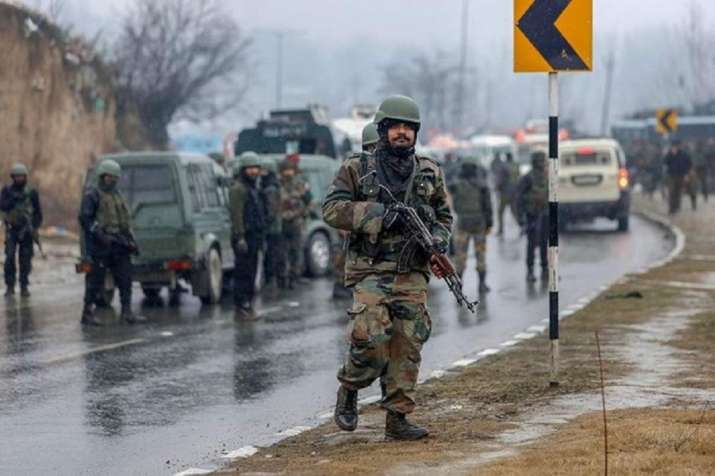
40 soldiers were martyred in the Pulwama terrorist attack in Jammu and Kashmir in 2019
Pulwama attack: Balakot airstrike, confrontation between India and Pakistan
After the Pulwama terror attack, the Indian government urged the Financial Action Task Force Against Money Laundering (FATF) to blacklist Pakistan. The FATF decided to keep it on the ‘gray list’ and gave Pakistan time until October 2019 to meet the 27 conditions it had set in June 2018, when it was included on the ‘gray list’, with a warning. If Pakistan did not comply, it would be added to the black list. On February 17, the state administration revoked the security provisions for the separatist leaders.
On February 26, twelve Mirage 2000 aircraft of the Indian Air Force crossed the Line of Control (LoC) and dropped bombs on Balakot, Pakistan. India claimed it attacked a Jaish-e-Mohammed training ground and killed a large number of terrorists, reportedly between 300 and 350. Meanwhile, Pakistan claimed they quickly scrambled planes to intercept IAF planes, which they dropped their payloads quickly back onto the Line of Control.
On February 27, the Pakistani Air Force carried out an airstrike in Jammu and Kashmir in retaliation for the Indian airstrike the day before. Both Pakistan and India agreed that the Pakistani airstrike caused no damage. However, in a dogfight that followed between Indian and Pakistani aircraft, an Indian MiG-21 was shot down over Pakistan and its pilot, Wing Commander Abhinandan Varthaman, was captured. Pakistan then released Varthaman on March 1.
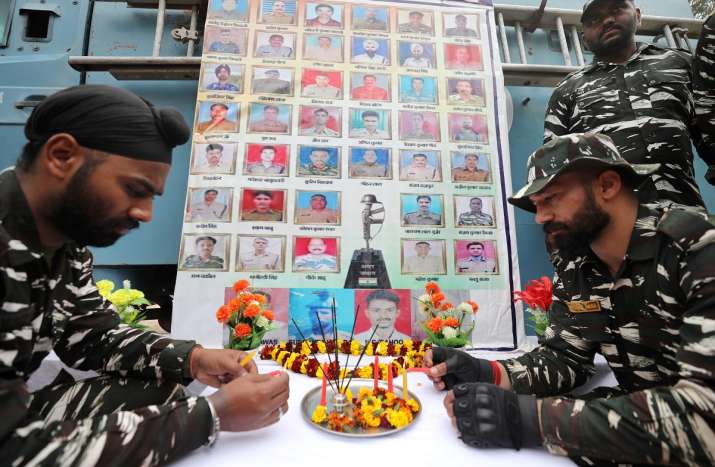
Jammu: Personnel from the Central Reserve Police Force (CRPF) pay tribute to the martyrs on the eve of the second anniversary of the Pulwama attack in Jammu on Saturday, February 13, 2021.
History of deadly terrorist attacks at J&K
Since 2015, Pakistan-based terrorists in Kashmir have increasingly committed high-profile suicide attacks against Indian security forces. In July 2015, three armed men attacked a police station and bus in Gurdaspur. In early 2016, four to six gunmen had attacked Pathankot Air Force Station. In February and June 2016, terrorists killed nine and eight security personnel, respectively, in Pampore.
In September 2016, four assailants attacked the headquarters of an Indian army brigade in Uri, killing 19 soldiers. On December 31, 2017, the Command Training Center in Lethpora was also attacked by militants who killed five members of the security personnel. These attacks took place in the vicinity of the Jammu Srinagar National Highway.
Latest news from India
.

She is a freelance blogger, writer, and speaker, and writes for various entertainment magazines.