



Airtel takes the lead in bringing 5G to India
From retail to cloud gaming, immersive entertainment, and autonomous vehicles, 5G is set to change the way we interact with each other, across geographies. Capable of supporting ultra-fast data, with speeds 10 to 100 times faster than 4G, it will allow us to realize the potential of a fully connected world.
In January 2021, Airtel demonstrated the LIVE 5G service in Hyderabad and became the first telecommunications company in India to do so through a commercial network. It was able to deliver 10x speeds, a 10x improvement in latency, and 100x concurrency compared to existing technologies. It demonstrated this range over its existing liberalized spectrum in the 1800 MHz band through NSA (Non-Stand Alone) network technology. Using a dynamic shared spectrum, the first of its kind, Airtel 5G and 4G operated seamlessly simultaneously within the same spectrum block. This validated Airtel5G readiness and it is a sign that 5G is not too far away for consumer access.
While 4G technology laid the foundation for faster internet speeds, making e-commerce, video streaming, and smartphones a regular part of our lives, here are some ways that 5G promises to affect our everyday lives.
Improved online shopping experience
Interactive changing rooms, real-time virtual testing and cash registers are part of the next retail revolution, which will be made possible by the high bandwidth and low latency of 5G, which will lend itself to augmented reality (AR). While customers can already visualize how certain furniture fits into their living rooms or choose the right glasses for their face, 5G will allow you to browse a store and shop virtually through your AR and VR glasses. If you are stuck in traffic and want to go to the supermarket without wasting time, an application on your mobile phone powered by 5G can check inventory in nearby stores and find the right combination, creating an immersive virtual shopping experience. .
Cloud games
The fact that 5G is at least a hundred times faster than 4G, capable of speeds of up to 10Gbps in some cases, is good news for cloud gaming. This means that the quality of the game will not depend on your device, as the processing of the game will be done in the cloud. All your phone will have to do is act as a display and controller, and you can even play console games on it. Cloud gaming relies heavily on high data rates and low latency, two things 5G is known for. It can not only deliver giga-speed, but latency as low as 10 milliseconds. In fact, according to Mordor Intelligence, the cloud gaming market is expected to reach $ 2.70 billion by 2025, up from $ 1.15 billion in 2019.
Immersive entertainment
5G not only improves mobile video streaming quality but also goes beyond two-dimensional with panoramic virtual reality (VR), augmented reality (AR) and ultra high definition (UHD), offering multi-sensory experiences. With 5G, the image resolution also goes up to 4K and 8K (up from the current 720p or 1080p), making on-demand and live-streamed video much more powerful. The multi-dimensional format allows for virtual access to the audience in stadiums or theaters, where they can choose a front-row seat for the action or choose multiple camera views, all thanks to the high bandwidth and low latency of 5G. The growing popularity of esports may end up competing with traditional sports.
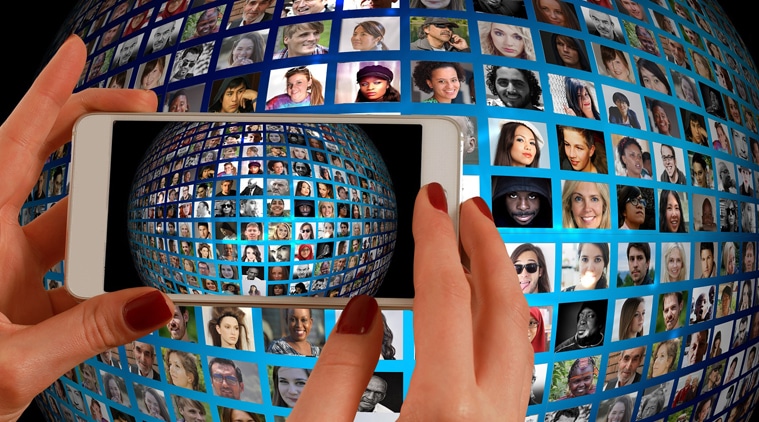 AR, VR, or 3D promise a richer life experience. (Source: Pixabay)
Richer communication experiences
Lightning-fast speeds and lower latency also translate into effective communication, with uninterrupted streaming of high-resolution video and audio without any lag. Offices will be able to remotely connect to locations around the world and have a full team meeting, with hundreds and thousands of people in attendance. All this without call drops or technological failures. As 5G is combined with AI, video editing and production will be much easier. The high bandwidth will also allow you to share and download massive presentations in seconds. It will also be easier to make meaningful connections with customers, with applications like AR, VR or 3D providing a richer live experience.
Autonomous vehicles
The future is full of exciting possibilities, like autonomous or driverless cars, all powered by 5G. The size of the autonomous car market, supported by the 5G network, is forecast at $ 560 billion by 2035, according to a Kearney study, based on interviews with more than 150 car decision-makers around the world. Relying on V2X (Vehicle-to-Everything) technology, ultra-reliable low-latency communication (uRLLC) powered by 5G cellular networks will allow vehicles to make real-time decisions in milliseconds so that they can process data at super speed to detect obstacles on the route, etc. This means fewer accidents and stress-free commuting.

She is a freelance blogger, writer, and speaker, and writes for various entertainment magazines.