


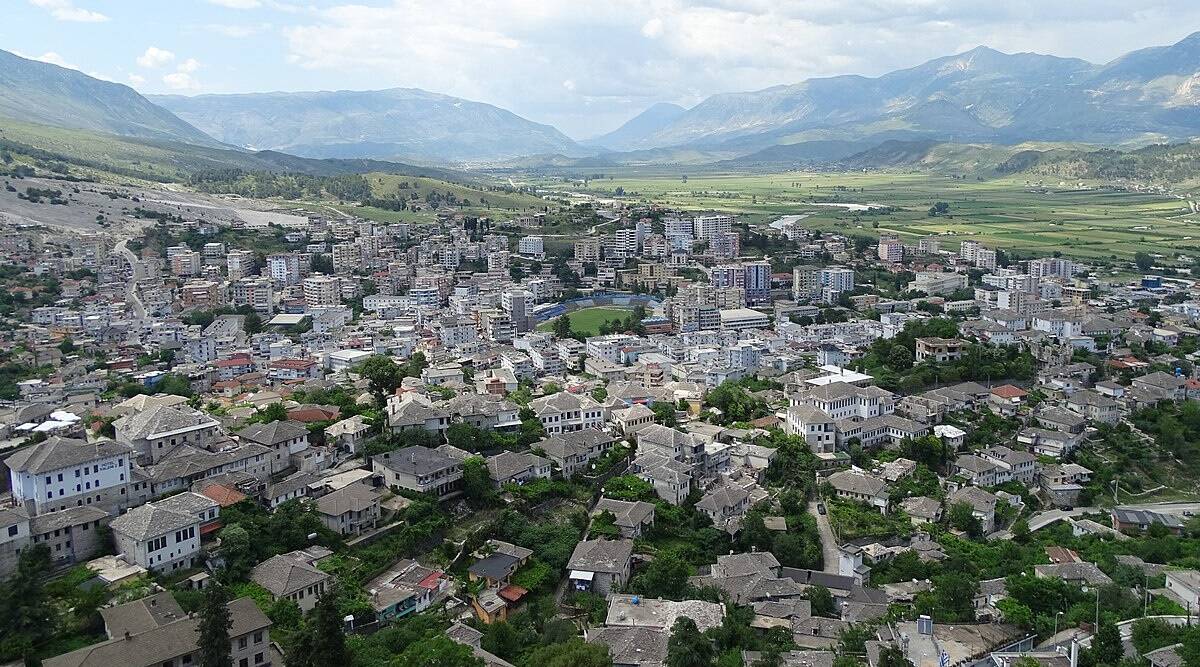
Albanian world heritage site struggles without tourists
Seeing the streets of the city in 2019 flooded by tourists enjoying its beauty was a dream come true for the residents of Gjirokastra, a city in southern Albania recognized as a UNESCO World Heritage site for its Ottoman period architecture.
It ended abruptly when the world crashed.
Called ‘the stone city’ due to its two-story turreted houses dating back to the 17th century, Gjirokastra and a second Albanian city, Berat, were inscribed as a UNESCO World Heritage Site in 2005 as “rare examples of a character architectural typical of the Ottoman period “.
After the city center renovation, Hysen Kodra was one of the locals who converted their 200-300 year old houses with wooden facades and stone tile roofs into guest accommodation. After all, the 700 tourist beds in the city center could barely accommodate the 120,000 visitors to Gjirokastra the year before the coronavirus pandemic.
“The pandemic cut through it abruptly, like with a knife,” says Kodra, whose 13-room hilltop guesthouse is empty. “Until 2019 we were so good, with more and more visitors every day, and in 2020 all the reserved rooms were canceled.”
The 13th century fortress on top of the city and the old radial-shaped bazaar from the 17th century, where tourists walk through the cobbled streets to taste dishes such as pasha qofte (meatball) or oshaf (dried figs with sheep’s milk), or buying handicrafts, curtains, rugs, traditional folk costumes and the like are the main attractions of Gjirokastra.
There is also the ethnographic museum housed in the former home of the late communist dictator Enver Hoxha and the recently renovated museum dedicated to the Nobel Prize winner for literature Ismail Kadare.
Tourism in Albania, one of the poorest countries in Europe, generated about 9 percent of GDP in 2019, and the government hoped to raise it to 10 percent this year.
The Kodra guesthouse overlooks Gjirokastra, which has a full-time population of 30,000, right where a monument to Hoxha was placed after his death, but removed in 1991 after the fall of the communist regime.
For a few years after Hoxha’s death in 1985, Kodra’s family moved in to make room for the monument. After a student protest toppled the communist regime in 1990, the family regained their properties.
With no other industry in the city, the government concentrated on renovating its typical houses and streets to prepare for tourism.
The turret houses were converted into small shops, cafes or restaurants, and between 2015 and 2019 there was a four-fold increase in the number of visitors, most of them coming from Italy, Poland, France and Spain, with a smaller number coming from U.S. , Canada, Australia and Israel.
From the pandemic A year ago, this type of activity has returned to the realm of illusions.
Manjola Bici, who has a small shop in the Old Bazaar that sells local teas and herbs, said there has been a 60 percent drop in visitors and that most of those who still come are Albanians who normally do not stay overnight. Despite renewed efforts to promote the city online, revenues have fallen dramatically. Many stores remain closed.
Bici and its neighbors have tried to change the variety of items they sell or lower their prices to attract domestic consumers, and have asked the government to reduce business taxes to help them. She hopes the vaccines will help stop the pandemic and bring tourists back.
“They can see for themselves that they are the only tourists, customers of today,” he said showing the empty street to journalists.
“I don’t think we can survive for long like this unless the government cuts all taxes, say, for a year,” Kodra adds. “We are not sure if the reservations will arrive for April-May.”
But Loena Bakuli in charge of tourism projects in the municipality trust the future.
“The pandemic will soon disappear and tourists will return and see a different and more beautiful city,” he said.

She is a freelance blogger, writer, and speaker, and writes for various entertainment magazines.