


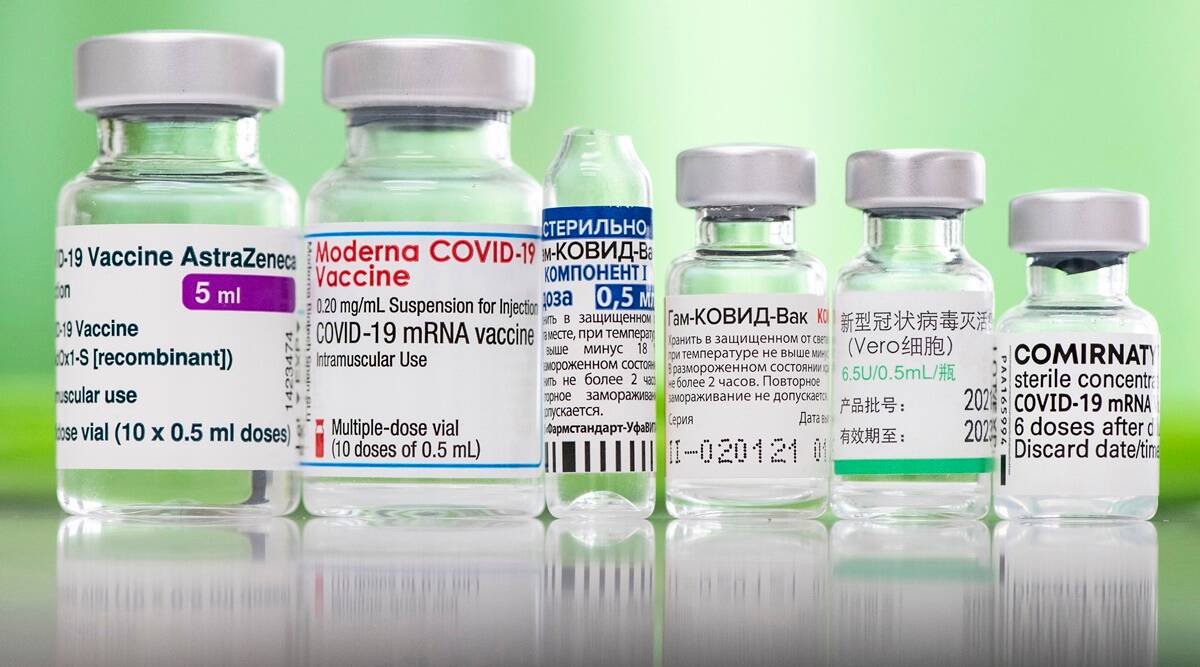
countries leading the vaccination drive
Countries around the world have stepped up vaccination as new variants of the new coronavirus emerge. According to Bloomberg’s Covid-19 vaccine tracker and figures provided by Our World in Data (an initiative led by the University of Oxford), more than 580 million doses of the vaccine have been administered and 127 million have been fully vaccinated. persons. However, that represents less than 2% of the world’s population, as there are many countries that have not yet started vaccination campaigns.
According to the data of the mentioned sources, the European nations seem to be better than the rest of the world. Vaccine launches in advanced economies are better than those in emerging and developing countries, as the latter are highly dependent on imports. On the other hand, despite being two of the largest vaccine manufacturers, India and China have also struggled to inoculate large percentages of their populations.
As governments rush to administer the Covid-19 vaccine, here are the countries that have been able to vaccinate the most people to date:
Israel
Israel has vaccinated 52.6% of its population with 4.76 million fully vaccinated people. Its small size, both in terms of area and population, well-developed infrastructure, strong healthcare system, and highly centralized government, have all played a role in the success of Israel’s vaccination.
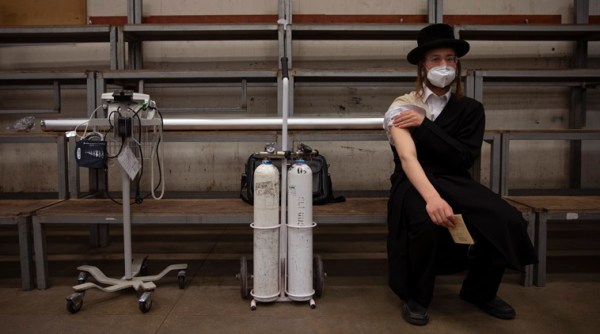 A man rests after receiving his second dose of the Pfizer vaccine in Bnei Brak, Israel. (AP)
Prime Minister Benjamin Netanyahu also managed to stock up on the vaccine by allowing manufacturers to collect health data and measure the effectiveness of injections. Added to this is the low level of vaccinations in the country, as Israelis place a lot of trust in their medical professionals, an attitude the Wall Street Journal characterizes as a “cradle-to-grave” relationship.
According to a survey by Imperial College, London, and YouGov, 48% of Israelis were very confident in the vaccine, while only 4% reported that they did not trust it at all. Among other high-income nations, only the UK had more confidence in the vaccine (52%). France and Germany reported 18% and 22% respectively.
Seychelles
Seychelles has vaccinated 37.76% of its population with 36,866 fully vaccinated people. Benefiting from having excellent relations with India and the United Arab Emirates, along with a very small population, this small island nation has managed to fully vaccinate more than 37% of its citizens. The Seychelles are heavily reliant on tourism, which was hit hard in 2020, dropping 70% according to a government statement.
As a result, the country began a gradual reopening of the borders in June and eliminated all quarantine requirements for travelers in February 2021, provided they could show a negative RT-PCR test taken within 72 hours of their trip. However, while the implementation of vaccination has been successful, the cases have also increased considerably. In all of 2020, the country reported 275 cases of Covid-19, a number that has since risen to 4,135.
United Arab Emirates
The UAE has vaccinated 22.39% of its population and 2.19 million people are fully vaccinated.
After being hit by the double hit of Covid-19 and falling oil prices, the UAE was forced to act swiftly to revive its economy. In December, it was the first country to approve China’s SinoPharm vaccine for general use. Despite no conclusive data on efficacy or side effects, the UAE government claimed it was 86% effective and urged its citizens to get vaccinated.
In late March, UAE tech company G42 announced a joint venture with SinoPharm called Hayat-Vax that would produce a renowned version of the product. G42 announced that it had the initial capacity to produce 2 million doses of the vaccine per month, a number that would eventually increase to 200 million doses per year. The UAE has also opened vaccines to all residents over the age of 16.
Monaco
Monaco has vaccinated 21.38% of its population with 8,331 fully vaccinated people.
In January, the president of the Monaco National Council, addressing the media, said he hopes to vaccinate 80,000 people “as soon as possible.” Monaco pre-ordered 15,600 doses of the vaccine in the summer of 2020, an early start that allowed it to ensure a sufficient supply to inoculate its entire population. In addition, Monaco provided free Covid-19 tests to all citizens during the holidays, without the need for them to present a prescription for the same. As a small, wealthy and well-connected nation, Monaco was adequately equipped to carry out a widespread vaccination campaign, an effort reflected in its successful implementation.
Chile
Chile has vaccinated 18.54% of its population with 3.51 million fully vaccinated people.
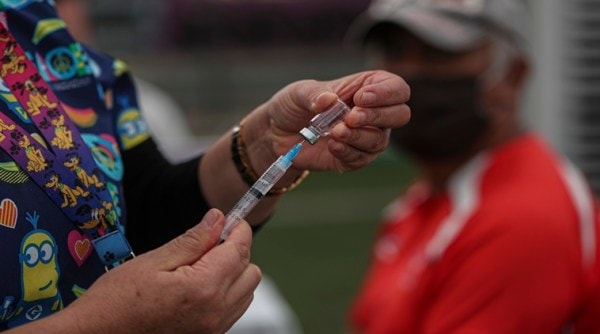 A health worker prepares an injection of the Sinovac Covid-19 vaccine at a community center in Santiago, Chile. (AP)
Suffering one of the worst Covid-19 outbreaks in Latin America alongside a constitutional crisis and massive protests, the Chilean government signed early agreements with a number of vaccine manufacturers to ensure sufficient doses. Chile has done much better than its neighboring countries and has organized the fastest per capita vaccination campaign in Latin America.
United States of America
The United States has vaccinated 16.28% of its population with 53.4 million fully vaccinated people.
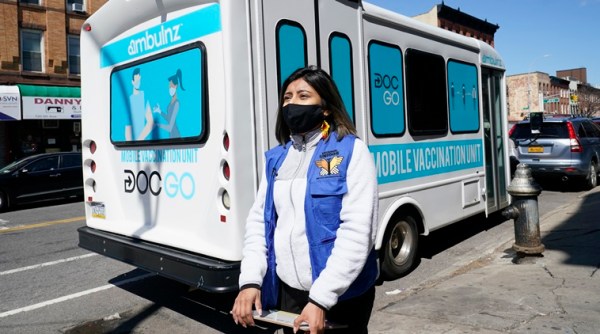 A mobile vaccination van in Brooklyn. (AP)
The United States initially topped the list of countries with the worst response to the pandemic, but managed to turn its fortunes by implementing an incredibly efficient and wide-ranging vaccination campaign. Under Operation Warp Speed, the US sought to procure vaccines through a massive public-private partnership that prioritized speed over details such as cost and potential side effects. A month after Joe Biden’s presidency, vaccine manufacturing increased significantly when Moderna announced that it could deliver 200 million doses a month by the end of May. Policies implemented by both Trump and Biden fueled this success. Under the Trump administration, manufacturers were tasked with building or expanding nearly two dozen plants under the Defense Production Act. President Biden took it a step further, ensuring that the federal government could help Pfizer source the heavy machinery it needed and force a key subcontractor to produce 24 hours a day, 7 days a week, so that the vaccine could bottled faster.
Through an unprecedented stimulus bill, the Biden administration allocated $ 20 billion for the creation of a national vaccine distribution plan and another $ 50 billion to increase testing efforts.
Bahrain
Bahrain has vaccinated 15.42% of its population with 253,000 fully vaccinated people.
Bahrain became the second country after the United Kingdom to grant emergency approval to the Pfizer vaccine. In addition, like the United Arab Emirates, it also approved the SinoPharm vaccine. It was also the first country to allow vaccine appointments through a mobile app called the BeAware app, initially launched as a contact tracing mechanism at the start of the pandemic.
Serbia
Serbia has vaccinated 14.49% of its population with 1.01 million fully vaccinated people.
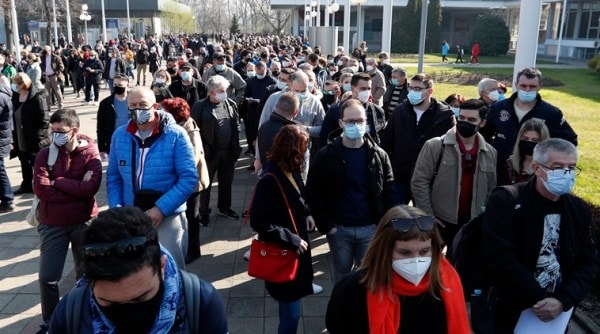 People queue for an injection of the Oxford AstraZeneca vaccine in Belgrade. (AP)
The Serbian Prime Minister was the first European leader to receive the Pfizer vaccine, while his Minister of Health was injected with SinoPharm and the Minister of Internal Affairs, the Russian vaccine, Sputnik V. Despite official insistence that Serbia acted apolitical , benefited from being in the middle of the battle fought by Russia and China for supremacy in Eastern Europe. The strategy of leveraging China against Russia paid off, as Serbia procured large doses of the vaccine, while other European countries have struggled with supply. Serbia has become one of the main vaccine administrators in Europe, and recently announced that it would offer free vaccines to all foreigners who enter.
malt
Malta has vaccinated 10.41% of its population with 52,340 people fully vaccinated.
Despite having proven to be the exception in terms of its willingness to buy vaccines in bulk, Malta credits the EU for the smooth development of the vaccines. Health Minister Chris Fearne said in an interview that Brussels’ “unprecedented” joint purchase of vaccine doses reduced competition that would have prevented smaller countries like Malta from buying vaccines. In addition to its procurement strategy, Malta also implemented a number of good practices, including hiring non-medical workers to administer the vaccine and communicating with a wide range of manufacturers to purchase supplies such as syringes.
Morocco
Morocco has vaccinated 9.78% of the population with 3.57 million people fully vaccinated.
Morocco’s vaccination campaign initially faced many challenges as cases skyrocketed and, despite promises by government officials that the vaccination rollout would take place in mid-December, the program did not it started up to four weeks later. A Lancet study found that the majority of Moroccans were reluctant to get vaccinated. While the government tried to allay fears by insisting that the vaccine was not mandatory, it also drafted (but did not ratify) legislation suggesting otherwise. However, regardless of your decision, like many other countries on this list, targeting multiple vaccine providers proved to be an effective solution.
(The list does not take into account overseas territories and dependencies, including Gibraltar, the Cayman Islands, Bermuda and the Isle of Man)
.

She is a freelance blogger, writer, and speaker, and writes for various entertainment magazines.