


Blow to Oli as Nepal top court Reinstates Dissolved House
On Tuesday, the Supreme Court of Nepal reinstated the dissolved House of Representatives and ordered the government to convene the House session within the next 13 days, a setback for Prime Minister KP Oli on his 70th birthday.
Nepal plunged into a political crisis after President Bidhya Devi Bhandari dissolved the 275-member Lower House on December 20 and announced new elections on April 30 and May 10 at Oli’s recommendation, amid a fight for power within the ruling Nepal Communist Party (NCP) between factions led by the Prime Minister and Pushpa Kamal Dahal ‘Prachanda’ and Madhav Kumar Nepal.
On Tuesday, a five-member constitutional court, headed by Chief Justice Cholendra Shumsher Rana, in a unanimous ruling said that the provisions of the Constitution cited by Oli and Bhandari were not relevant as the Constitution of Nepal has made a provision special against the dissolution of Parliament. in the medium term without exhausting all the options to form an alternative government.
The court, which also consisted of judges Tej Bahadur Karki, Bishwambar Shrestha, Anil Sinha, and Sapana Pradhan Malla, also instructed Oli and Bhandari to convene the Chamber within 13 days.
What’s next for Oli?
With a loss of face, Oli is left with limited options like proving the majority in the House or stopping the efforts of the rival NCP faction from assuming leadership of the government. It is speculated that Oli could even support Sher Bahadur Deuba, leader of the main opposition party in the Nepalese Congress, and prop up a government on a basis of shared power. However, this is an approach that could also be explored by the Prachanda-Nepal faction of the PNC.
Before the verdict was announced, there was a heavy police fanfare around the Supreme Court. Oli summoned the heads of the security forces, including the head of the Nepal army, to assess the likely political response and the resulting public order situation in the face of his defeat.
Shortly after the verdict, Prachanda asked the prime minister to resign. “If Oli is a bit embarrassed, he should resign now,” he said.
In early December, Oli, facing infighting within the PNC, made the unilateral recommendation to dissolve the Chamber to Bhandari, blaming his opponents within the Party for not cooperating with him or letting the government-run smoothly.
He argued that going to the people for a new term is the greatest democratic exercise and said that he made the decision to dissolve the Chamber since he enjoyed the inherent power as leader of a majority government.
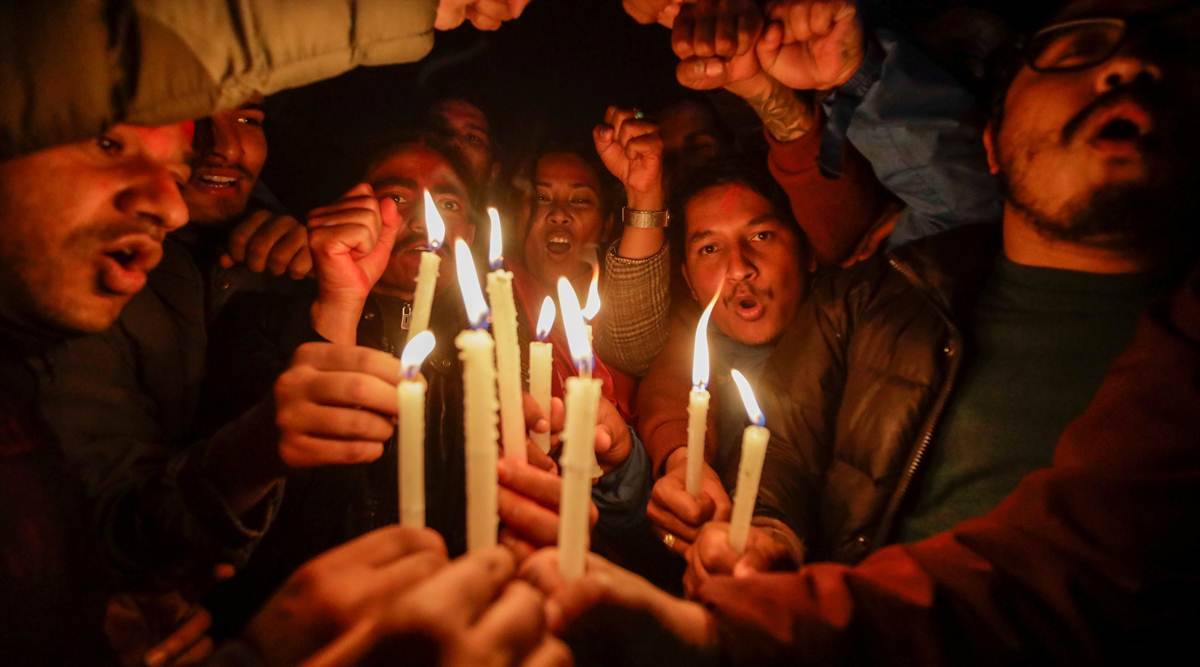
The dissolution of the House sparked protests from a large faction of the ruling PNC led by Prachanda and Nepal. The measure was immediately challenged in the Supreme Court by 13 different petitioners, including the main whip of the NCP.
In the last general election, the NCP had obtained a majority of almost two-thirds. However, after Oli’s decision to dissolve the Chamber, the two factions, one led by Oli and the other led by Prachanda and Nepal, have been claiming to be the “real” PNC, an issue that the Electoral Commission has not yet addressed. resolved. .
While Oli remains the chairman of the PCN who unilaterally controls the government, the Prachanda-Nepal faction of the PCN has more deputies and enjoys a majority within the party’s central secretariat, the steering committee, and the central committee.

She is a freelance blogger, writer, and speaker, and writes for various entertainment magazines.