


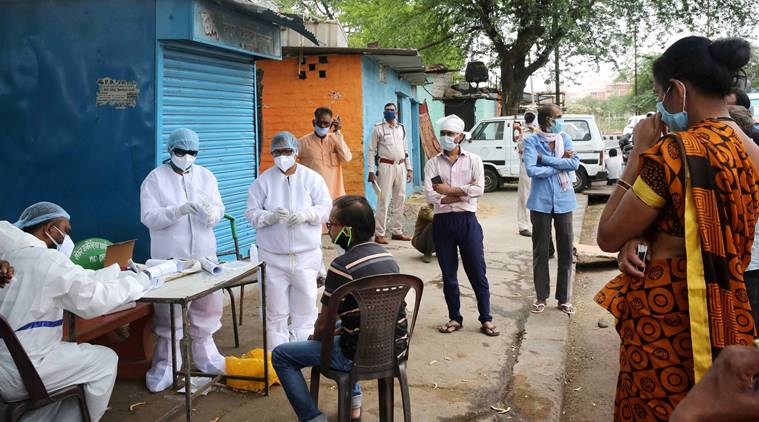
The Union Ministry of Health has asked states and UT to test workers at the grocery, vegetable, and other vendors for coronavirus, stating that if undetected, they can transmit the infection to large numbers of people. (PTI / File)
The Union Ministry of Health has asked states and UT to test workers in grocery, vegetable, and other vendors for coronavirus, stating that if they are not detected, they can transmit the infection to large numbers of people.
In a letter to the states and UT, the Secretary of the Ministry of Health, Rajesh Bhushan, also emphasized the need to put the ambulance transport system into operation with an oxygen facility and a rapid response mechanism.
He stressed that the ambulance rejection rate must be monitored on a daily basis and reduced to zero.
With the COVID-19 pandemic now spreading to newer areas in the country, Bhushan said there are likely to be scattered cases, clusters of cases, or large outbreaks in the districts and that the main goal is to control the outbreaks, especially in new locations.
“At the same time, the focus must be saving lives at all costs,” he said.
“While we have done better so far than many other countries in this regard, our goal should be to further reduce mortality and ensure that it does not exceed the 1% mark,” Bhushan said in the letter, addressed to other secretaries at the boss. principal secretaries and secretaries (health).
Bhushan noted that early case detection through intensive testing, immediate isolation, or admission to a healthcare facility, and ensuring appropriate clinical management are important components of reducing mortality.
“Early case detection is the most crucial element in ensuring that case fatality is reduced. It helps not only to identify the case before it becomes critical but also to control the spread of the infection, ”he said in the letter.
He emphasized improving surveillance for influenza-like illness (ILI) / severe acute respiratory illness (SARI), as its symptoms are mostly the same as those of COVID.
Once a positive case is identified, a quick contact tracing should be done and at least 80 percent of the contacts should be identified and quarantined within 72 hours, he said.
Typically, a person would have an average of 30 contacts during a follow-up period two days before the onset of symptoms, Bhushan said.
“There may be potential hotspots for the spread of infection, such as industrial clusters with closed work environments, people who come from high-prevalence areas, other high-density areas such as slums, prisons, nursing homes, etc.
“Also, grocery stores, vegetable vendors and others, etc. they can be possible spreaders of infection to large numbers of people. Testing in such areas and on those people must be done proactively according to ICMR guidelines, ”stressed Bhushan.
It also asked states and UTs to conduct weekly death audits to assess determinants of death, such as age differences, comorbidities, late notification to the hospital, and the clinical protocols that were followed.
“This will help identify challenges that need to be addressed and facilitate effective case reporting and ensure timely and necessary medical interventions,” Bhushan said.
In the letter, Bhushan also said that a regular house-to-house search should be conducted to identify high-risk people, namely the elderly, people with comorbidities and pregnant women, among others.
In parallel with this exercise, containment and buffer zones should be established and the perimeter of the containment zone properly secured.
“It is necessary to put into operation an ambulance transport system with oxygen installation and a rapid response mechanism. The ambulance rejection rate must be monitored daily and must be reduced to zero, “he emphasized.
The availability of COVID beds in all health facilities (government and private) should be proactively put into the public domain, he said, adding that responsible administrative officials should coordinate the transparent allocation of beds and timely admission.
A communication mechanism should be organized between patients and their families, he said.
He also urged the districts to analyze the health infrastructure requirement in terms of the availability of sufficient oxygen beds, ICU beds and ventilators and to take early measures to improve the health infrastructure based on the number of cases expected in the future.

She is a freelance blogger, writer, and speaker, and writes for various entertainment magazines.