


The Chinese government had criticized the BBC’s reports on the COVID-19 pandemic in China and on allegations of forced labor and sexual abuse in the Xinjiang region.
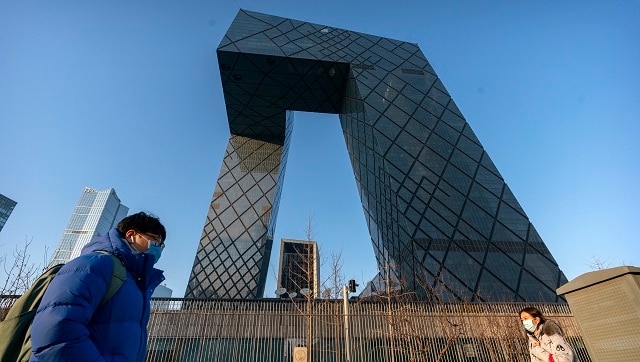
The CCTV headquarters building, the home of the Chinese state television network CCTV and its overseas division CGTN, in Beijing. AP
Beijing: China has banned BBC World News broadcasting in China, a week after threatening to retaliate for the revocation of the British broadcasting license for China’s state property CGTN.
The National Radio and Television Administration said in a midnight statement Friday that BBC World News China’s coverage had violated the requirements that journalistic reporting be truthful and impartial and undermined China’s national interests and ethnic solidarity.
the BBC In general, it can no longer be seen in China outside of some hotels, businesses and residential complexes for foreigners. It was not immediately clear whether the ban would affect reception at those facilities.
The Chinese government has criticized recent BBC reports on the COVID-19 pandemic in China and reports of forced labor and sexual abuse in the Xinjiang region, home to Uighurs and other predominantly Muslim ethnic groups.
“The channel does not meet the requirements to broadcast in China as an overseas channel,” the Radio and Television Administration said, adding that it would not accept BBCstreaming app for next year.
UK Foreign Secretary Dominic Raab called the move “an unacceptable restriction on media freedom” that would “only damage China’s reputation in the eyes of the world.”
Britain’s communications watchdog Ofcom revoked the license for CGTN, China’s English-language satellite news channel, Feb. 4. He cited ties to the ruling Communist Party of China among the reasons.
A spokesman for the Chinese Foreign Ministry said the next day that Ofcom had acted for “political motives based on ideological biases” and that China reserves the right to respond to protect the rights and interests of Chinese media.
The loss of his British broadcasting license was a major setback for CGTN. The channel has a European hub in west London and is part of a government push to expand China’s soft power and polish its image abroad.
US State Department spokesman Ned Price called it worrying that media operations were restricted within China, while “Beijing leaders use free and open media environments abroad to promote disinformation”.
He called on the Chinese government to allow its population free access to the media and the Internet. “Freedom of the press is an important right and it is key to guaranteeing an informed citizenry, an informed citizenry who can freely share their ideas among themselves and with their leaders,” said Price.
Subscribe to Moneycontrol Pro at ₹ 499 for the first year. Use code PRO499. Limited time offer. * Terms and conditions apply

She is a freelance blogger, writer, and speaker, and writes for various entertainment magazines.