


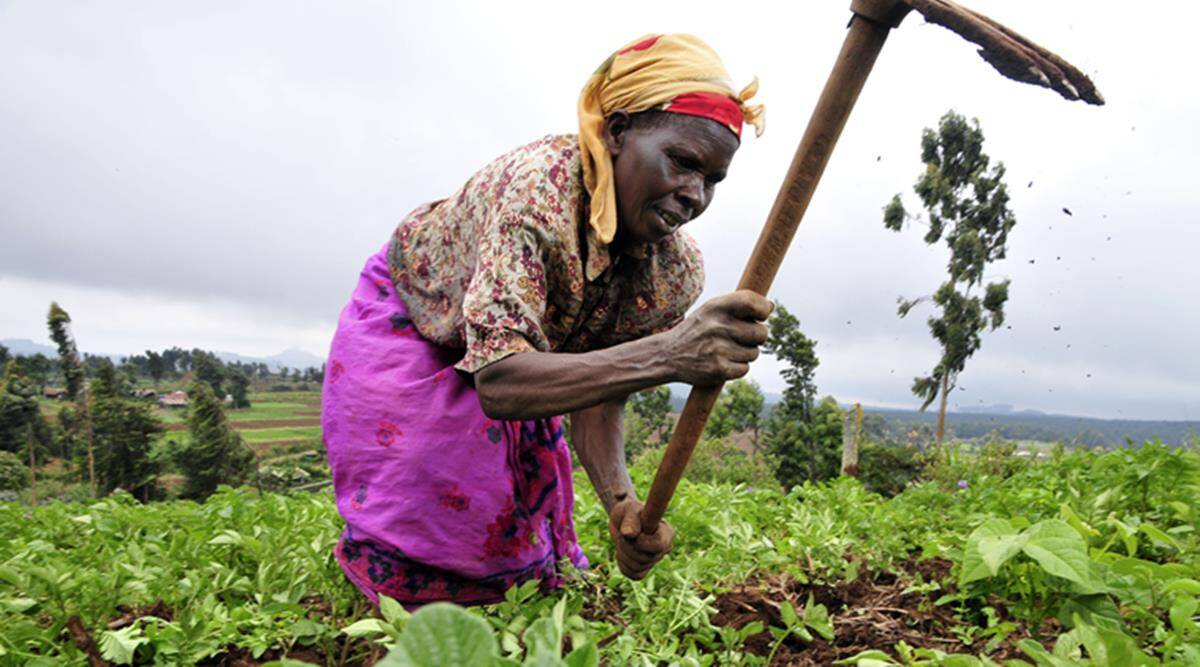
Women make up at least half of the world’s farmers, according to the World Bank. However, the invisibility of the gender issue in agriculture is evident. Women are the first to be affected by any change in agricultural lands affected by soil degradation and climate change. However, they lack secure access to land and resources.
But Zambia wants to change this unbalanced narrative, achieving land degradation neutrality (LDN) through gender mainstreaming.
So what is land degradation neutrality?
Land degradation means a temporary or permanent reduction or loss of the productive capacity of the land biologically and economically. And to reverse these adverse conditions or achieve stability in land use is what is called Land Degradation Neutrality (LDN). According to the Sustainable Development Goals (SDGs) adopted by the United Nations General Assembly in 2015, land degradation neutrality (LDN) (SDG 15.3) was described as a goal to be achieved by nations.
And Zambia is determined to incorporate gender mainstreaming into its governance system.
Zambia’s journey towards achieving gender parity began in 1985 when the south-central African country ratified the Convention on the Elimination of All Forms of Discrimination Against Women (CEDAW). This measure would give a boost to the momentum of gender equality. As a logical first step, the Ministry of Gender and Child Development (MGCD) was born to promote the empowerment of women and incorporate the gender perspective in the socio-political and economic fabric of Zambia.
Subsequently, in 2000 a National Gender Policy was developed (later revised in 2014) to prevent discrimination against women in governance systems and gender mainstreaming activities were carried out in all policies.
However, inequalities continue to exist and women continue to be dispossessed of land ownership and lack access to productive resources and markets.
“Land is a crucial part of life for African women and they still do not have the same access to it,” said Manyado Kanyata, representative of the Zambian Ministry of Water Development, Sanitation and Environmental Protection, who was part of the delegation. at COP14 to the United Nations Conference on Combating Desertification (UNCCD) in India.
What prevents Zambian women from participating effectively in environmental decisions?
According to the ministry, women in Zambia do most of the agricultural work in addition to domestic or reproductive work and have limited control over their work. Women also provide at least 61 percent of the workforce to agriculture, he said.
“Despite this, women do not have access to land, it is they who have to take care of families even after the land has been degraded,” Kanyata lamented.
Then there is another impediment: the lack of gender-disaggregated data and gender-sensitive indicators has proven to be an obstacle to providing baselines on gender inequalities in all sectors.
A report published by the Food and Agriculture Organization of the United Nations (FAO) in 2018 titled ‘National Gender Profile of Agriculture and Rural Livelihoods, Zambia noted that “the country has inadequate and sex-disaggregated data and gender-sensitive indicators in the agricultural and rural sectors. Compared to men, women perform unpaid and less paid rural work. Although women have some access to land, fewer women than men own land. “
So the low level of education of women on environmental issues is also a problem. “If a family is given a choice between the education of a boy or a girl, they will always choose a boy. Furthermore, financing and facilitating projects is also a challenge if you are a woman, ”said Kanyata.
Not to mention that cultural values and beliefs prevent Zambian women from participating in environmental decision-making.
“We want women to break the silence when someone takes their land from them,” said Dr. Yahya Msangi, Technical Advisor, Sustainable Development, Climate Change and Chemical Safety at Welfare Togo, a non-profit organization. Togo, located in West Africa, faces similar challenges as Zambia, where rural women have little or no legal protection of land and are prone to land grabbing.
“Not only do we have to improve their access to land, but women must also legally own the land, otherwise it can be easily taken away from them,” Msangi said.
What is Zambia doing to mainstream gender to achieve LDN?
The Zambian government developed a framework for gender mainstreaming. For its implementation, they divided the intervention into four parts: First, policy level; second, at the organizational and institutional level; third, at the project level and fourth, gender mainstreaming is carried out through gender.
Following this, they developed various policy frameworks such as the National Gender Policy and the Gender Action Plan on Climate Change to guide how the actions being taken in the country are gender sensitive.
They then incorporated gender through various land projects and conducted gender audits and analyzes.
The government also conducted capacity building workshops where they had the opportunity to work with the Global Environment Facility (GEF), an international organization that provides financial grants to countries, non-governmental organizations, civil society organizations. etc. that address environmental issues.
In most cases, people are aware of gender parity in Zambia but it is lacking in implementation, so they carry out continuous mass awareness, while supporting and monitoring gender action plans. “It is time to preach. Providing equal opportunities to women and men is the only way to benefit from the NDT concept. Furthermore, efforts to develop gender-sensitive monitoring, reporting and verification (MRV) systems are important to meet the objectives of LDN, ”said Kanyata.
Our message to the global community, Kanyata said, is as follows: “We are not trying to put women above men, but to bring them to a level where they can participate together to achieve the goal of neutrality in the degradation of the earth”.
.

She is a freelance blogger, writer, and speaker, and writes for various entertainment magazines.