


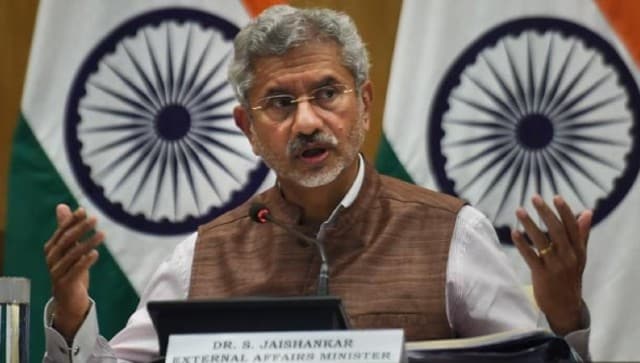
India and Russia hold Bilateral Cooperation on Afghanistan
Russian Foreign Minister Sergey Lavrov added that Russia was ready for the transfer of cutting-edge technologies and the ‘further manufacturing’ of weapons systems to India.
New Delhi: Russia on Tuesday promised to expand joint production of weapons systems in India as the two countries held extensive talks covering key areas of bilateral cooperation, as well as pressing issues such as the Afghan peace process and each other’s prospects for the Indo-Pacific region.
In their talks, Foreign Minister S Jaishankar and his Russian counterpart Sergey Lavrov also discussed the proposed free trade pact between India and the Eurasian Economic Union.
People familiar with the discussions said the Indian side informed the Russian delegation of its views and fears about China’s behavior in the context of the border row in eastern Ladakh.
Speaking at a press conference with Lavrov, Jaishankar, calling the talks “very warm”, “comprehensive” and “very productive”, said that much of the discussions covered preparations for President Vladimir Putin’s visit to India for the annual India-Russia summit later this year.
Warm, comprehensive and productive talks with Russian Foreign Minister Sergey Lavrov.
Ties between India and Russia are characterized by a constant ability to identify and update shared interests.
He discussed preparations for the Annual Summit later this year. pic.twitter.com/oFHUrxbtng
– Dr. S. Jaishankar (@DrSJaishankar) April 6, 2021
To a question, Lavrov ruled out the possibility of a future military alliance between Russia and China and claimed that the cooperation between the two countries was not directed against anyone.
Referring to bilateral defense ties, Lavrov said Russia was ready for the transfer of cutting-edge technologies and “further manufacturing” of weapons systems in India. Russia is already part of several joint military hardware production projects in India.
“I am sure that the deepening of military cooperation serves the national interests of both countries. At the same time, we respect the right of Indian friends to diversify ties in this area,” he said, calling the outcome of the talks “satisfactory”.
Without elaborating, Jaishankar said: “Our defense sector requirements in the last year were quickly addressed.”
When asked if the issue of US pressure on India not to acquire Russian weapons systems was featured in the talks, he said no.
He said the United States is putting pressure on India and any other country that wants to sign an agreement with Russia to acquire weapons.
Russia’s foreign minister arrived here Monday night on a nearly 19-hour visit amid apparent concern in Moscow over the proactive approach of Grid member countries, including India, to address geopolitical developments in the Indo-Pacific region.
Lavrov travels to Islamabad from India.
Jaishankar said both nations understand the importance of the India-Russia relationship for world peace, security and stability and that the review of bilateral ties was “really encouraging.”
“I shared our point of view on the Indo-Pacific. As our prime minister pointed out at the Shangri-La Dialogue a few years ago, contemporary challenges require countries to work together in new and different ways,” said Jaishankar.
Russia has been critical of the Quad grouping which has aimed to ensure a free and open Indo-Pacific in the context of China’s growing assertiveness in the region. Quad comprises India, the United States, Japan and Australia.
Lavrov referred to “Indo-Pacific” as “Asia-Pacific” and said both sides stressed the need to preserve ASEAN’s central role in the region. He also highlighted the need for interaction between Russia, India and China under the existing trilateral framework.
At the press conference, Lavrov rejected suggestions of any future military alliance between Russia and China.
“We have heard speculation about pro-military alliances not only regarding Russia-China relations, but we have also heard about supposedly promoted alliances such as Middle East-NATO, Asia-NATO. Today we exchange views on this and our friends have the same position as us. We think this is counterproductive, “he said in Russian.
“We are interested in inclusive cooperation that is for something, not against someone,” Lavrov said.
Jaishankar said events in and around Afghanistan were also featured in the talks.
“For India, what happens in Afghanistan has a direct impact on its security. I shared our view that a lasting peace there would require harmonizing the interests of all, both within and around that nation.”
“The peace process must be based on fundamental principles that we all subscribe to. A political solution must mean an independent, sovereign, united and democratic Afghanistan,” he said.
The Russian Foreign Ministry called the talks “an open-minded exchange of views on the most important issues on the international and regional agenda.”
He said that both sides declared the similarity of approaches to urgent global and regional issues, including a peaceful settlement in Afghanistan, the Syrian crisis, the situation around the Iranian nuclear program, as well as a common understanding of the principles to shape a Reliable security architecture in the Pacific and Indian Oceans.
Jaishankar said that discussions on trade and investment were also held.
“We note the appetite for greater mutual investment by both countries. Russia’s support for our Gaganyaan program has progressed, which we deeply appreciate,” he said, adding that the long-standing partnership in the nuclear and space sectors is listed in the conversations
“Our rapidly expanding energy cooperation, which now includes long-term commitments, was also on the agenda.”
Lavrov said both sides agreed on the need to push forward work on a renewed intergovernmental agreement on mutual security of investments and solving problems related to national currencies.

She is a freelance blogger, writer, and speaker, and writes for various entertainment magazines.