


Libya still plagued by conflict After 10 years of NATO intervention
The Libyan revolt 10 years ago was supposed to usher in change. In the wake of the Arab Spring, in February 2011, Libyans also took to the streets to protest against the country’s authoritarian ruler, Muammar Gaddafi, who had been in power since 1969. The protest turned into a military conflict, and part of the army joined the rebel opposition groups and the other part remains loyal to the regime.
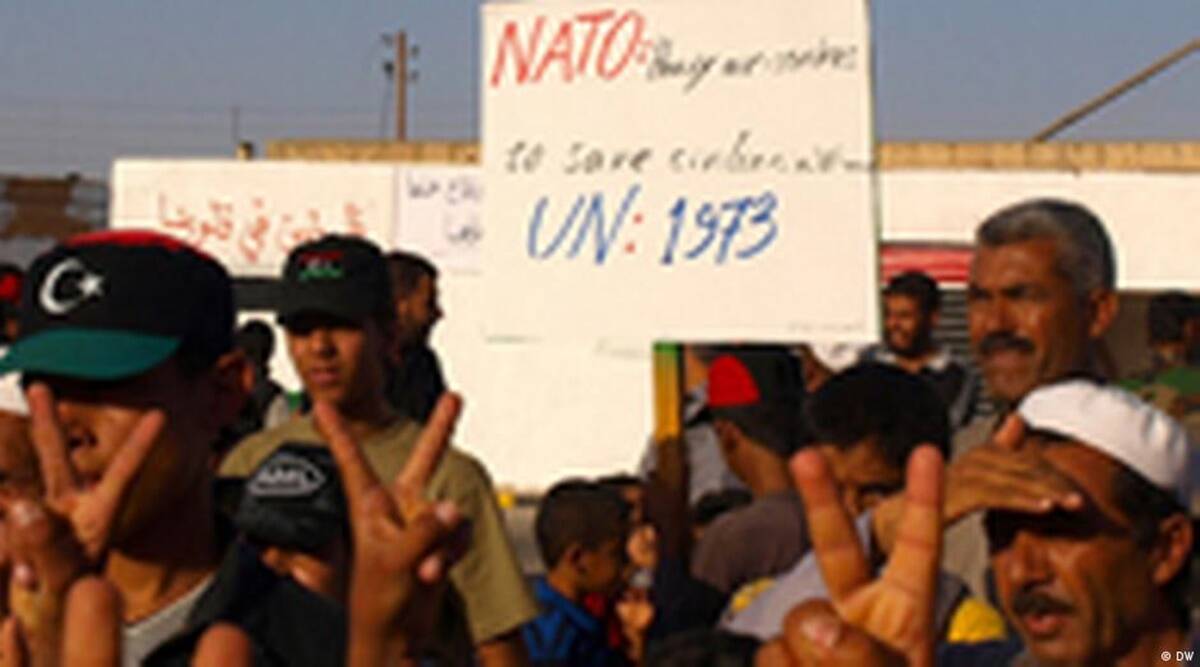
On March 17, the United Nations approved a resolution allowing measures to be taken to establish a no-fly zone to protect the civilian population. Two days later, the United States, Great Britain and France launched airstrikes. On March 31, NATO took sole command of international air operations over Libya.
NATO support was vital to the rebel fighters. In October, they entered Gaddafi’s hometown of Sirte and one last tough battle took place, ending with Gaddafi’s capture and murder on October 20. An image of the dictator’s bloody face went around the world.
Wait for a new beginning
For many politicians in the West, his death represented an opportunity for a new beginning: “We hope that after decades of dictatorship, the people of Libya can now begin a new peaceful and democratic chapter for their country,” said the Foreign Minister of Libya. Germany, Guido Westerwelle. . “We support the new Libya on its way to a better, peaceful and democratic future.”
This was not to be. The violence did not stop for long and a civil war raged for years. In retrospect, the NATO intervention was not a total success, even if it immediately put an end to the human rights violations of the Gaddafi regime and saved lives in the short term by reducing the conflict, Thomas Claes, project director for Libya in Friedrich The Ebert Foundation in Tunisia told DW.
“However, it failed to bring long-term stability and democracy to Libya,” he noted. “At the same time, it must be said that the current destabilization can be traced back to the policies and crimes of the Gaddafi era, to a much greater extent than to NATO intervention,” he added.
Massive impact on migration
The war also had a massive impact on the lives of between 600,000 and 700,000 migrants and refugees, mainly from sub-Saharan Africa, in Libya. Many of them hoped to stay there. If there had been peace, the country would have offered good job opportunities thanks to its natural resources. The war forced many of them to attempt the dangerous journey to Europe. Many of those who were unable to cross the Mediterranean were captured by the Libyan coastguard and taken to camps.
“According to many reports, human rights violations are frequent there,” Claes said. The militia-run camps are apparently even worse. “It is almost impossible for rights organizations to monitor what is happening there,” he explains. He added: “The situation of the people interned there is particularly difficult. In addition, the situation of refugees has worsened due to the pandemic, the increase in prices and the closing of borders in Europe ”.
Ceasefire fragile
In recent months, under the auspices of the United Nations, it has been possible to persuade local actors to reach a ceasefire agreement, possibly also because Libya has been understood to be the scene of an international conflict between external powers. like Turkey and Russia. Without a political agreement, Libya could completely collapse, as could Syria. There has also been more pressure from the Libyan population itself.
In early February, regional players made a breakthrough at a UN conference. Representing the Libyan population, the delegates elected an interim government of national unity whose most important task is to organize the elections that have been set for December 2021, as well as to draft a new constitution and introduce new voting rights. The interim government is supposed to resign after the elections. Claes said the roadmap was largely positive, but there were also a number of problems. Recently, a confidential UN report accused the new Prime Minister Abdelhamid Al-Dabaiba of corruption and of having bought the votes of certain delegates. If this turns out to be true, it would certainly confirm the impression that he plans to remain in power beyond December, Claes said.
He explained that the prime minister had created a particularly large cabinet, with 30 ministers and secretaries of state, to pacify as many factions as possible. “Of course, all of this has to do with money. Each group gets a ministry to access state funds that they can then distribute to their own clientele. This development appears to be a realistic vision for the next few months, if not years, ”he predicted.
Claes also speculated that lawmakers in office since 2014 could also lobby to ensure they keep their terms beyond December to guarantee access to state funds. He said there was a fine line between consensus and corruption: “Libya could become a kind of kleptocracy, in which corruption is effectively part of the system.”
This could be the price to pay for stability and peace. But the uprising against Gaddafi and the NATO intervention 10 years ago had more ambitious political goals.

Eric is a professional news editor, writer, and blogger for the last 10 years. He is working with NewsGater as an off-beat news editor cum writer.