



NASA’s Hubble Space Telescope Has a Beautiful Image of Earth.
To celebrate the 31st anniversary of the launch of the Hubble Space Telescope, NASA astronomers pointed the observatory at one of the brightest stars seen in our galaxy on Friday. Called AG Carinae, it is approximately 20,000 light-years distant. It is not just a point of light in the sky, but a glowing nebula of gas and dust that fights a battle within itself to prevent self-destruction. The star began to form about 10,000 years ago through an eruptive process and is likely to survive for only a few years, a minuscule lifespan compared to the roughly 10 billion years of the life of our Sun.
The Hubble Space Telescope launched 31 years ago on April 24 and is still working, capturing spectacular cosmic images. Stars like AG Carinae are among the biggest and brightest. The image tweeted by NASA was taken in ultraviolet light, which offers a slightly clearer view of the dust structures around the star. Hubble is ideal for ultraviolet-light observations.
Shortly after being published, the image received great recognition, with some users even thanking NASA. “What a beautiful star, living with its own nebula. I love the little complexities that allow these hot stars to do these things, ”said a Twitter user with the username @Ferric_Foxide. Another user @KramerDuc thanked NASA for “enriching humanity.”
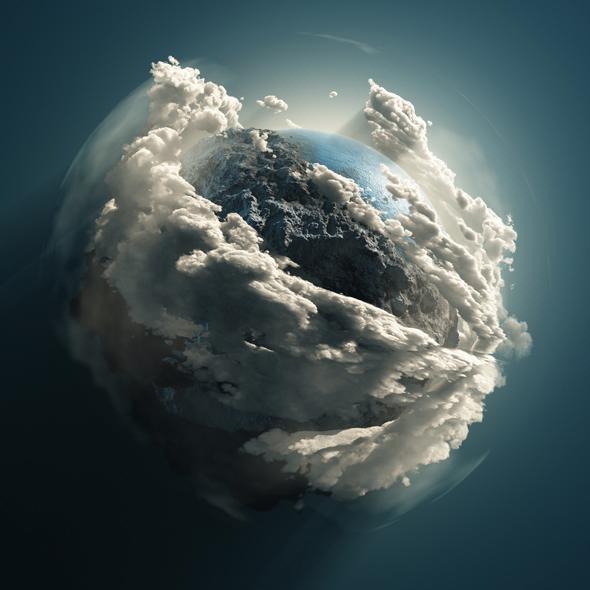
Called the Luminous Blue Variables, NASA Explains that these stars exhibit a dual personality. For a long time, they sit idle and then suddenly erupt in a burst of impatience. Due to their size and incredibly high temperatures, these stars are constantly in a battle to maintain stability between outward radiation pressure and outward gravity. Radiation often wins, exploding the star in a volcanic eruption. After the outbreak, these stars regain some stability and remain silent for a time.
AG Carinae has also gone through this period of two forces pushing it in opposite directions, but its outbursts have been less violent compared to its peers, NASA says.
Luminous blue variables are important to astronomers as they have far-reaching effects on their environment, but they are rare to find: fewer than 50 are known. These stars spend thousands of years in this phase and many of them end their lives in titanic supernova explosions, enriching the universe with elements heavier beyond iron.

She is a freelance blogger, writer, and speaker, and writes for various entertainment magazines.