


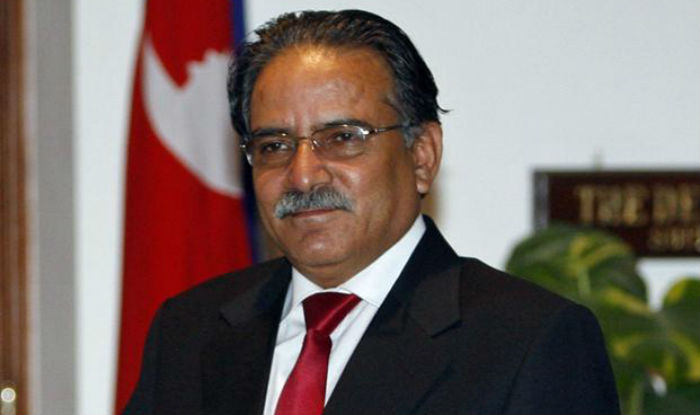
Kathmandu: Amid a rift in the ruling Communist Party of Nepal (PCN), its executive chairman, Pushpa Kamal Dahal “Prachanda”, met with President Bidya Devi Bhandari, hours after he extended the budget session of Parliament on the recommendation of the Cabinet on Thursday.
President Bhandari, a former PNC leader, is said to have asked about the latest crack within the ruling party, My Republica reported.
Early in the day, Prime Minister K P Sharma Oli met with President Bhandari and asked him to extend the budget session. Before this, a cabinet meeting recommended the president extend the lower and upper chamber sessions, according to the newspaper.
According to Prime Minister Ramsharan Bajgain’s media adviser, the prime minister held separate consultations with PNC President Prachanda and Nepali Congress Speaker Sher Bahadur Deuba on Thursday morning regarding the extension of the budget session of parliament.
Meanwhile, a meeting of the PNC Standing Committee, which took place briefly on Thursday, was postponed until Friday because the party’s top leadership failed to reach a consensus on Prime Minister Oli’s resignation.
Top PCN leaders on Tuesday demanded the resignation of Prime Minister Oli, saying that his recent comments against India “were neither politically correct nor diplomatically appropriate.”
“The Prime Minister’s statements that India was conspiring to remove him were not politically correct or diplomatically appropriate,” said Prachanda.
Prime Minister Oli, 68, claimed Sunday that there have been various types of activities in “embassies and hotels” to remove him from power. He said that some Nepalese leaders were also involved in the game.
Accusing the southern neighbor and the leaders of his own party by the Prime Minister was not appropriate, a senior party leader quoted Prachanda during the Standing Committee meeting on Tuesday.
Prachanda has spoken over and over again about the lack of coordination between the government and the party and was pushing for the PNC to follow a one-man-one-position system.
In July 2016, Oli resigned as prime minister just before a vote of no confidence after the Maoists withdrew the support of the coalition government. At the time, he called the no-confidence motion a conspiracy by “foreign elements” to turn the country into a “laboratory” and obstruct the implementation of the new Constitution. In early April of this year, Oli was asked to step down.
Prime Minister Oli faced strong criticism from his own colleagues for the government’s failure to comply and the lack of coordination between the party and the government. They alleged Oli to run the government at his whim without consulting the party.
Last week, Oli skipped the first and second day of the Standing Committee meetings. He did, however, attend the third meeting on Saturday, but briefly.

She is a freelance blogger, writer, and speaker, and writes for various entertainment magazines.