


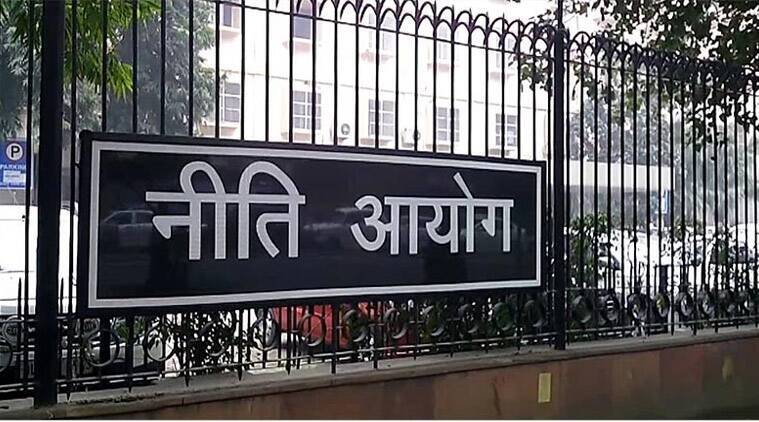
NITI Aayog focus on house-to-house surveillance for active cases
Union Health Secretary Rajesh Bhushan and NITI Aayog Member (Health) Dr. VK Paul held a high-level meeting on Wednesday to review the status of Covid-19 in Punjab and Chandigarh. Health officials in Punjab and Chandigarh were advised to refocus on effective house-to-house surveillance as part of a ‘test, follow-up, treatment, and vaccination’ strategy to identify active cases with particular attention to timely evidence.
They were also advised to instruct all district officials and local administration to ensure rapid contact tracing and rapid isolation in order to break the chain of transmission, identify groups, and focus on strict implementation of the micro-containment zone approach.
The Union Health Ministry said they should focus on increasing testing, effective contact tracing, strict containment, intensifying the vaccination campaign and applying physical distancing measures.
The review meeting was attended by the Chief Secretary (Health), the Mission Director (NHM), the Punjab and Chandigarh State Watch Officer and all the District Collectors / District Magistrates / Municipal Commissioners from the Punjab districts. Also present were Dr. Balram Bhargava, DG ICMR and Dr. (Prof) Sunil Kumar, DGHS, MoHFW.
The Union ministry said Punjab reported nearly 21 percent of the weekly increase in new Covid cases and around 2,740 average daily cases in the past seven days. During the same time frame, the state has also seen a 30 percent week-over-week increase in new Covid deaths and is reporting an average of 53 deaths daily.
Chandigarh has also followed a similar pattern in the last week. The UT has reported a nearly 27 percent week-over-week increase in new cases and a 180 percent week-to-week increase in new daily deaths. During the last week an average of around 257 daily cases and 14 daily deaths have been reported.
Through a detailed presentation, a granular analysis of the heavily affected districts in Punjab and Chandigarh was presented along with some key statistics. Dr. Paul re-emphasized the importance of strict and continuous measures to break the chain of transmission and not squander the achievements of last year’s collaborative efforts. Increased testing with a focus on RT-PCR testing, effective contact tracing with at least 25-30 close contacts from each positive case, strict implementation of containment zones, intensification of the vaccination campaign, and application of measures of physical distancing stood out as the axis of effectiveness. administrative strategy. It was also re-emphasized to strengthen public and private hospital infrastructure and reactivate health workers to eliminate any complacency and fatigue.
Evidence
On the testing front, the state and UT were asked to effectively implement the ‘test, trace and treat’ strategy to escalate testing until positivity drops to less than 5 percent, which increases significantly. testing in all districts with a minimum of 70% RT-PCR tests and use of rapid antigen tests as screening tests in densely populated areas, as well as in areas where clusters of cases are reported and for mandatory screening who were negative in the rapid antigen test (RAT) to the RT-PCR test.
Vaccination
It was recommended to the state and the UT to ensure the priority vaccination of eligible population groups in the districts that report higher cases, the transfer of unused vaccine doses from one district to another for optimal use of vaccine doses available, to ensure that no sedimentation of the vaccine occurs at any level. cold chain storage and maximum use of vaccination capacity in public and private sector health facilities.
Union health officials added that there was no vaccination shortage at the state / UT level. The Center is regularly reviewing vaccine stocks, and the Center will continually replenish vaccine doses based on the state / UT consumption level.
The Chief Secretaries (Health) of Punjab and Chandigarh along with the developing countries of the worst affected districts such as Amritsar, Ludhiana, SBS Nagar and Jalandhar shared their comments on the activities being carried out in the districts to break the chain of transmission; preparation of hospital infrastructure; clinical treatment protocols in hospitals to reduce mortality; and awareness campaigns.

She is a freelance blogger, writer, and speaker, and writes for various entertainment magazines.