


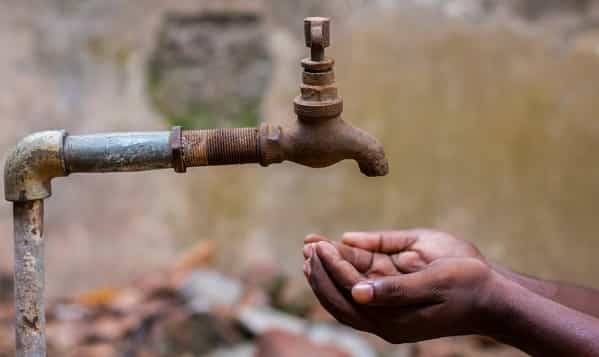
Pakistan has become one of the top 10 countries facing a severe water crisis.
According to Munir Akram, Pakistan is expected to be among the top ten countries in the world battling water scarcity, Pakistan’s Permanent Representative to the United Nations (UN). They highlighted the country’s water problems.
He made these remarks while discussing the execution of Sustainable Development Goal 6, which focuses on clean water.
But, according to ARY News, he added that when it comes to water scarcity, Pakistan stands at the top of the list.
The UN representative emphasized the causes of water challenges, citing climate change, floods, and drought as examples.
According to the UN envoy, the five accelerators Financing, Data and Information, Capacity Development, Innovation, and Governance can be used to provide an acceptable framework around which to arrange the issues of the discussions.
When it comes to water governance concerns, Munir Akram stated that transboundary water cooperation plays a critical role in promoting wider regional integration, peace, and sustainable development and addressing regional security difficulties and climate change adaptation.
“Transboundary waters currently account for 60% of all freshwater flows on the planet. At least one of the 286 transboundary river and lake basins and the 592 transboundary aquifer systems is occupied by 153 countries.” According to the news channel, the statement read.
“With the majority of the world’s water resources shared by two or more countries, the need for transboundary cooperation takes even greater urgency with rising water scarcity,” the report continued.
This comes when Pakistan’s national water resources have plummeted and are under significant strain, despite the arrival of summer earlier than usual in mid-March and April.
This is because the snow melting process in steep and hilly places has slowed.
Pakistan’s water supply is significantly lower than it was last year. It’s also lower than usual for the last five or ten years.
On Saturday, the country got 90,000 cusecs in all of its rivers, decreasing 27.73 percent from the 10-year average of 1,37,700 cusecs.

Eric is a professional news editor, writer, and blogger for the last 10 years. He is working with NewsGater as an off-beat news editor cum writer.