


Recovery Underway After Worst Global Recession since World War II
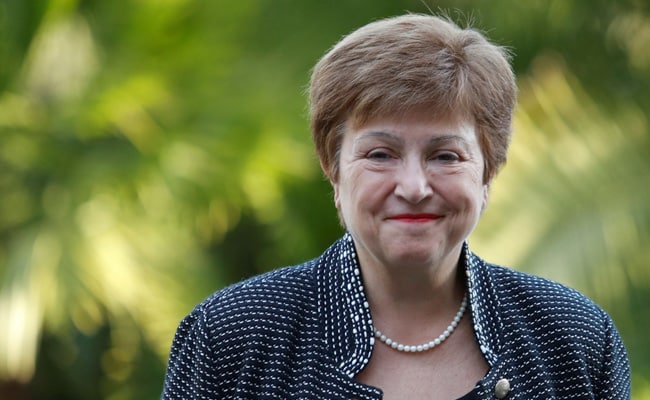
A day after the International Monetary Fund forecast six percent global growth for this year, IMF Managing Director Kristalina Georgieva said that after the worst global recession since World War II, recovery is underway.
The outlook, he said, is brighter because millions of people are benefiting from vaccines and because of increased political support, especially in the US.
Ms. Georgieva said this is in addition to the exceptional and coordinated actions taken over the past year.
“Without them, without those fiscal and monetary measures, the global contraction last year would have been three times worse. This could have been another Great Depression,” he said.
“We have good news that there is light at the end of the tunnel. After the worst global recession since World War II, the recovery is underway. As you know, yesterday we raised our forecast for global growth to 6% for this year, 4 , 4 percent by 2022, “Georgieva told reporters at the beginning of the IMF-World Bank annual spring meeting on Wednesday.
However, while there is light, the crisis continues to cast a dark shadow. Economic fortunes diverge dangerously. A small number of advanced and emerging market economies, led by the United States and China, are making progress. The weakest and poorest countries are lagging behind in this multi-speed recovery, he lamented.
“We are also facing extremely high uncertainty, especially about the impact of new virus strains and possible changes in financial conditions. And there is a risk of further economic scars due to job losses, learning losses, bankruptcies, extreme poverty, hunger … the right actions now to give everyone a fair chance, not only in the arms of the people but also in the lives of the people and in vulnerable people, “said the IMF Director-General.
The Global Policy Agenda released by the IMF, he said, focuses on three things: a fair chance for the vaccine, a fair chance for recovery, and a fair chance for the future.
“This is perhaps the most momentous decision any government can make this year. The focus should be on increasing public investment in green projects and digital infrastructure, in people’s health and education, to ensure that everyone can benefit from the benefits. transformation towards greener, smarter, and more inclusive economies, “he argued.
“To unlock this potential, countries will need sufficient public revenue and will need more efficient spending. In many cases, this will mean more progressive taxation and agreement on issues such as minimum taxation for companies and international tax rights. This has to be together with greater support to the poorest countries as they fight the crisis and seek to invest in the future, “said Georgieva.
He said the IMF will propose a new allocation of special drawing rights (SDR) of 650,000 million dollars.
“This will help address the long-term global need for reserve assets and provide a substantial liquidity boost to all of our members, especially the most vulnerable. What this crisis has shown us is how inescapable our shared destiny is. Now, we must harness this broader sense of common responsibility to foster a just recovery and a resilient world after a pandemic, “he said.
Responding to a question, Georgieva said that after the global financial crisis, the most important lesson the world learned was that we needed to boost the resilience of the banking system.
“And we did. After this crisis, our understanding of the importance of working together to build resilience to future crises is definitely much deeper, and it is that concentration within communities, countries, and internationally, on the building of people’s resilience, investing in education, health, social protection, building the resilience of our planet, “he said.
Georgieva said that many of us were concerned that the pandemic would put aside concerns about this other crisis, the climate crisis.
“That did not happen. On the contrary, we understand much more this interdependence and also our dependence on nature,” he added.
“A more comprehensive resilience of the economy even going back to the global financial crisis, we now recognize that we work in the banking system but not in non-bank financial institutions, and we are seeing that we have to expand this resilience by building more broadly towards them as well,” He said.
Georgieva said that she believes this is a change that we all have to integrate into our thinking and hoping it would help us to be much more proactive as a global community, as countries, as businesses, and families, towards this more resilient world.
“It is no coincidence that we all recognize that digitization, climate resilience, the transition to the new climate economy, greater attention to equality, are lessons we are taking away,” he said.
(This story has not been edited by NewsGater staff and is automatically generated from a syndicated feed.)

She is a freelance blogger, writer, and speaker, and writes for various entertainment magazines.