


SDRF Installs Early Warning Water-Level Sensor at Raini village
The Uttarakhand State Disaster Response Force (SDRF) has installed a siren-based early-warning water level sensor system in Raini village in Chamoli district to alert villagers and disaster management authorities in case of a sudden rise in the water level of Rishi Ganga.
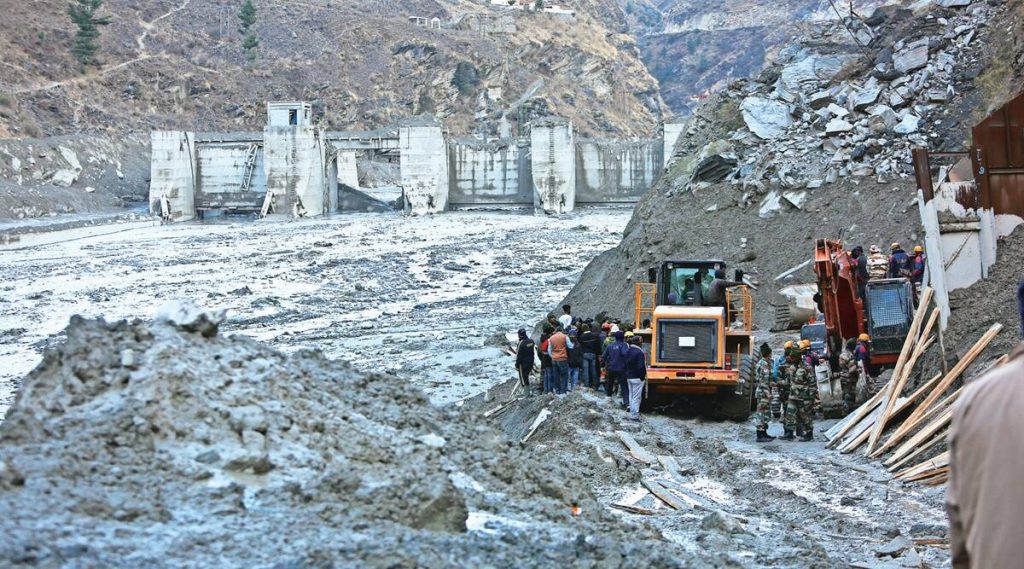
The move comes after a flash flood on February 7 that killed 62 people, washed away the Rishi Ganga hydroelectric project, and damaged the NTPC hydroelectric project downstream in the Tapovan area. Search operations for missing persons in the village of Raini and Tapovan were ongoing as of Friday, and there are still 142 missing persons.
SDRF commander Navneet Bhullar said a water level sensor was installed that will sound an alarm when the river’s water level rises above 3.5 meters. Bhullar said the alarm will be audible up to a radius of 5 km and, in the event of a power outage, it will be audible up to 1 km.
A team of SDRF personnel has also been deployed to the village to alert state and district control rooms and higher authorities in the event of rising water levels.
The sensor system has been a relief to residents of the Raini Chak Subhai and Raini Chak Lata villages, located on both sides of the Rishi Ganga; after the flash flood, they spent several nights in the woods so they didn’t have to look. for safe ground in case of any disaster after sunset.
Bhawan Rana, the pradhan of Raini Chak Subhai village, said the sensor has provided psychological relief to residents who are concerned about the formation of a lake about 6 km upstream from the village.
Meanwhile, a group of 14 scientists and staff from SDRF and ITBP set out on Friday to visit the lake, analyze the threats prevailing in the body of water and recommend measures to avoid any disaster. The team is scheduled to arrive at the lake on Saturday.
One of the scientists, Dr. Kalachand Sain, who is the director of the Dehradun-based Wadia Institute of Himalayan Geology, said that so far there is no threat from the lake because the water is continuously discharged.
Previously, on February 17, three DRDO scientists and SDRF staff had gone to the lake. Both groups will jointly survey the lake and submit a report to the government.

She is a freelance blogger, writer, and speaker, and writes for various entertainment magazines.