


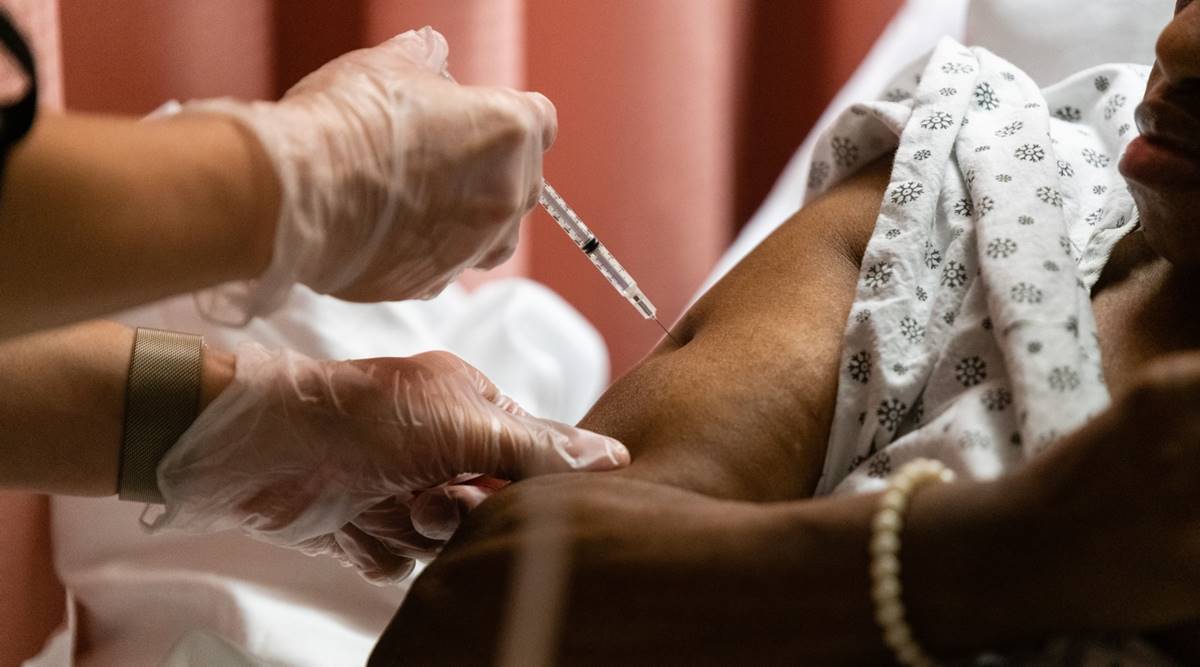
Many Europeans are desperate for a coronavirus vaccine. But not just any vaccine.
As AstraZeneca vaccines are rolling out in European Union countries this month, joining the Pfizer and Moderna doses already available, some people are reluctant to be offered a vaccine that they perceive, fairly or not, as the second best.
Poland began vaccinating teachers on Friday with the AstraZeneca vaccine, and some had doubts about being lined up for a vaccine they believe is less effective than others.
Ewelina Jankowska, principal of a primary and secondary school in the Wilanow district of southern Warsaw, said that no one at her school was excited about receiving the AstraZeneca vaccine, although many signed up, eager for any protection against a virus that has changed their lives and those of their students. ‘schooling.
“I’m still more afraid of the disease than I am of the AstraZeneca vaccine,” said Jankowska, who was infected with COVID-19 in November and made a very slow recovery.
AstraZeneca, an Anglo-Swedish company, developed its vaccine with the University of Oxford. While regulators in more than 50 countries, including the EU drug watchdog, have authorized its widespread use, it has drawn more criticism than others because of concerns about its human trials.
Several European nations have recommended the drug only for people under 65, and other countries have recommended it for people under 55, because AstraZeneca’s trials included a relatively small number of older people.
AstraZeneca CEO Pascal Soriot acknowledged the criticism, but said regulators had reviewed the data and deemed the vaccine safe and effective. COVID-19 vaccines are in short supply, he said, and the AstraZeneca injection offers high levels of protection against serious diseases, which is the most important benchmark in the fight against a virus that has killed more than 2.3 million people in all the world.
“It is perfect? No, it’s not perfect, but it’s great, ”Soriot said Thursday. “We are going to save thousands of lives and that is why we come to work every day.”
The World Health Organization says the AstraZeneca vaccine is approximately 63% effective in preventing symptomatic COVID-19 after two doses. That’s less than the 95% effectiveness reported by Pfizer and Moderna, but experts caution against such comparisons as the studies were conducted at different times and under different conditions. Furthermore, all have been shown to be extremely effective in preventing serious illness and death.
“If they offer you any approved vaccine, take it,” said Peter Piot, director of the London School of Hygiene and Tropical Medicine. “All have been found safe. Vaccines are the world’s route back to some kind of normalcy. “
French President Emmanuel Macron infuriated scientists last month when he called the AstraZeneca vaccine “near ineffective” for people over 65, a comment that came hours before the European Medicines Agency approved it and He said it could be used for all adults, including those over 65. Those who criticized Macron argued that he had spoken irresponsibly and encouraged skepticism about vaccines.
French Health Minister Olivier Veran, who is 40 years old, emphasized this week getting the AstraZeneca vaccine to show the government’s confidence in it for those under 65.
Adding to AstraZeneca’s woes are EU criticism of a shortage of deliveries, its lack of approval still in the US, and a preliminary study that raised questions about the vaccine’s ability to combat a variant of COVID-19. discovered in South Africa. In its favor, however, is that it is cheaper and can be stored at refrigerator temperatures, not the much colder temperatures required by the Pfizer and Moderna vaccines.
In Cyprus, Health Minister Constantinos Ioannou warned that opting for one over the other runs the risk of delaying inoculations, given limited deliveries of Pfizer and Moderna vaccines in the coming weeks, noting that “all three vaccines drastically reduce hospitalizations and deaths ”.
However, in Poland, Spain and Italy, some unions complained that their members are scheduled to receive the AstraZeneca vaccine, expressing concern that they are treated as less important than the groups receiving the Pfizer or Moderna doses.
Police unions in Spain have expressed concern over the government’s decision to administer AstraZeneca injections to police, military, firefighters and teachers.
Some Italian private sector doctors are rejecting AstraZeneca vaccines, saying they want the Pfizer or Moderna injections to reach public health workers.
“I am not an AstraZeneca no-vax. But for a population at risk, healthcare workers, should use the same vaccination strategy for all and not create any discrimination, ”said Dr. Paolo Mezzana, a plastic surgeon in Rome who helps manage a group of private doctors in Facebook. They have been posting refusals to accept the AstraZeneca injection after vaccinations started this week.
.

She is a freelance blogger, writer, and speaker, and writes for various entertainment magazines.