


How the ancient city of Cyrene near Libya
Cyrene is located between the Egyptian border and Benghazi, one of the key cities that rose up against dictator Moamer Kadhafi in 2011. Since then, the country has fallen into anarchy and violence that raised fears for its rich ancient heritage.
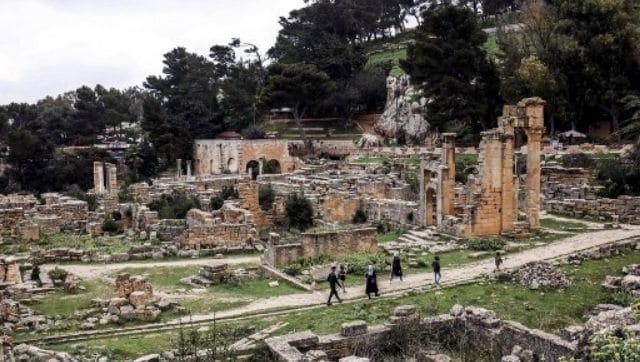
People walk through the remains of the Sanctuary of Apollo in the ruins of the ancient city of Cyrene in eastern Libya. Abdullah Doma / AFP
The spectacular ruins of the ancient Greek city of Cyrene survived the 2011 Libyan revolution and a decade of anarchy that followed, but today they face new threats: looting and bulldozers.
In the warm spring sun, a handful of tourists take advantage of the North African country’s ceasefire to stroll through the Temple of Zeus, atop a windswept hill near the eastern tip of Libya’s Mediterranean coast.
There are no queues here.
The few visitors, all Libyans, wander the Apollo sanctuary and amphitheater, before visiting a museum that houses faceless busts of Greek deities and nude statues in marble.
Founded in the 7th century BC. C., Cyrene “was one of the major cities in the Hellenic world,” according to the UN cultural agency, UNESCO, which added the site to its World Heritage List in 1992.
“A thousand years of history are written in its ruins,” he said. However, beyond the fence that delimits the protected part of Cyrene, the residents of present-day Shahat are taking possession of the land in state trust and then selling it to real estate developers.
Treasure hunters are excavating other areas in hopes of smuggling looted artifacts to sell abroad.
“Some people are going in and razing areas containing artifacts, dividing and selling them, then building blocks of flats on these priceless sites,” said Adel Abu Fejra of Cyrene’s department of antiquities.
‘This is our land’
Abu Fejra said his department “cannot even measure” how much has been lost, as the plots “are outside the fenced area under our protection.”
Cyrene is located between the Egyptian border and Benghazi, one of the key cities that rose up against dictator Moamer Kadhafi in 2011. Since then, the country has fallen into anarchy and violence that raised fears for its rich ancestral heritage.
UNESCO in 2016 added Cyrene and four other sites in Libya to its List of World Heritage in Danger. The war saw the country split into fiefdoms under the control of a kaleidoscope of militias, including the Islamic State group that once had a stronghold in Derna, just 70 kilometers further east.

A view of the ruins of the Temple of Demeter in the ancient city of Cyrene in eastern Libya. Abdullah Doma / AFP
Today, despite the signing of a peace accord between Libya’s main factions and the creation of a unity government this month, many residents have more immediate concerns than protecting ancient heritage.
“They want us to stop using our land around the ruins, saying that there are still artifacts underneath them, but this is our land and we have the right to exploit it,” said Saad Mahmoud, owner of nearby farmland.
“It is up to the state to find solutions and pay homeowners compensation that is tailored to rising real estate prices, which has made it difficult for us to find alternatives.”
Graffiti and looting
Like Mahmoud, many of Shahat’s 50,000 residents see the urgent need for housing as a higher priority than the preservation of ancient ruins.
A city plan last updated in 1986 has been largely ignored.
Ismail Dakhil, an official with the eastern Libyan museum department, says up to 30 percent of the ancient city may have been built. And that is not the only problem.
“There has been graffiti on the ancient ruins and a lot of informal excavations, where antiquities are unearthed and smuggled out of the country,” he said.
Libya has laws designed to protect its ancient heritage, monitor archaeological excavations, and punish violators. But Dakhil says they have little effect, with “derisory fines and prison sentences” of up to a year at most.
Some now hope that after a decade of violence, the new government will also improve the protection of valuable historic sites.
“Heritage protection policies need to be reviewed,” says researcher and historian Ahmad Faraj. “I hope this government has a new vision.”

She is a freelance blogger, writer, and speaker, and writes for various entertainment magazines.