


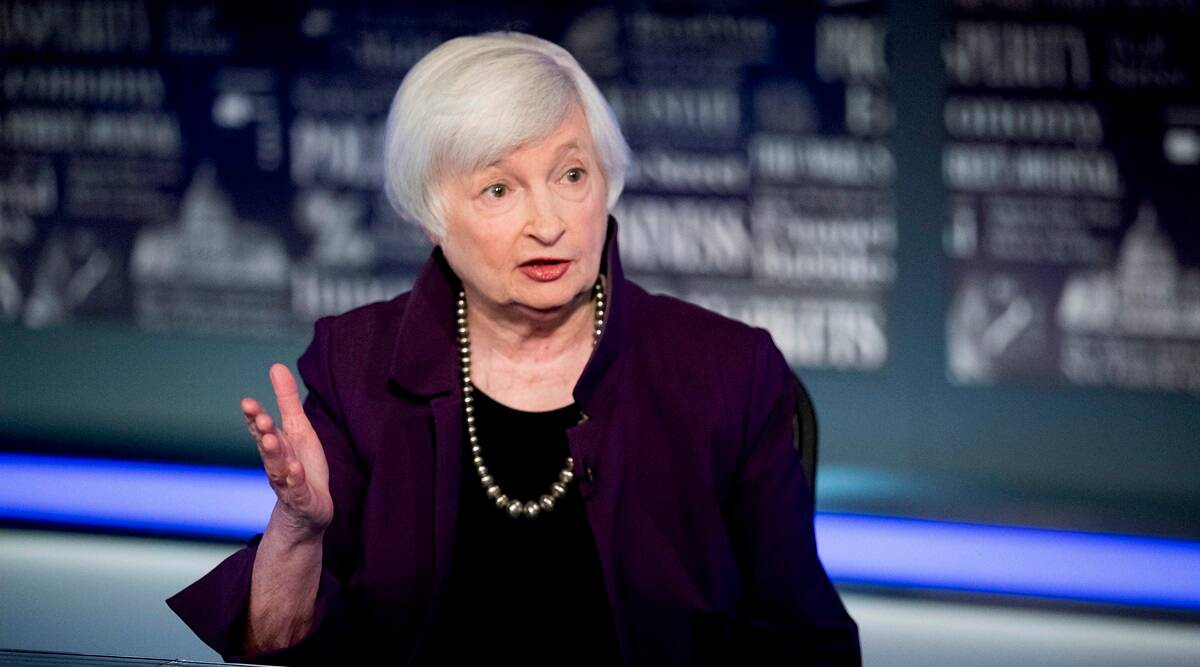
The administration of US President Joe Biden told its allies on Friday that it was reengaging with them to help lift the world economy out of its worst recession since the Great Depression, in contrast to the go-only approach. Donald Trump.
United States Secretary of the Treasury Janet Yellen told her peers from the wealthy democracies of the Group of Seven that Washington was committed to multilateralism and “places a high priority on deepening our international engagement and strengthening our alliances “.
Yellen spoke to the G7 in a virtual video conference, chaired by Britain, in which he called for continued fiscal support to ensure the recovery, saying “the time to go big is now.”
Britain said officials discussed the possibility of helping workers and businesses affected by the pandemic while ensuring the sustainability of public finances “in the long term.”
In addition to the United States and Great Britain, the G7 includes Japan, France, Germany, Italy, and Canada.
Italian Economy Minister Roberto Gualtieri said the group had pledged to continue coordinated action to support the economy. “The withdrawal of support for the policies is premature,” he wrote on Twitter.
Biden has proposed an additional $ 1.9 trillion in spending and tax cuts in addition to more than $ 4 trillion of coronavirus relief measures enacted by his predecessor Trump.
British Finance Minister Rishi Sunak is expected to say next month that he will extend his economic rescue programs and that the control of public finances will have to be addressed later.
Britain said G7 officials also agreed that moving towards “an international solution to the fiscal challenges of the digital economy” was a key priority.
Countries have been trying to revive attempts at a global approach to tax giant digital companies, many of them American, like Amazon and Alphabet’s Google, after the Trump administration blocked progress.
Britain called on the G7 countries to agree on a joint approach to taxing internet giants in mid-2021, a deadline agreed upon by the Group of 20 countries at large.
NEW IMF RESOURCES
Some G7 countries are willing to back a new issue of the International Monetary Fund’s own currency, known as special drawing rights (SDRs), to help low-income countries hit by the coronavirus crisis, a last step taken. time in 2009.
Officials from the United States, the IMF’s largest shareholder, had signaled that they were open to a new $ 500 billion issue, sources said Thursday, another shift from Biden away from opposition from the Trump administration.
A G7 source, who asked not to be named, said the United States told other countries it needed a few weeks to finalize the SDR increase.
The move is politically difficult for Yellen because it would provide new resources to all IMF members, including rich countries, China, and US adversaries like Iran and Venezuela, sparking Republican opposition.
“For the last year, the G7 hasn’t even talked about special drawing rights, so considering it was part of this agenda, it’s certainly progress,” said Eric LeCompte, executive director of the Jubilee USA Network, a charity group that is focuses on reducing poverty. “In terms of getting a strong global stimulus, SDRs should be part of the equation.”
IMF Managing Director Kristalina Georgieva did not mention SDRs in a tweet about the meeting, but said G7 members were in “full alignment” on vaccines, fiscal stimulus, climate, and “comprehensive support for vulnerable countries. “.
Sunak called on private creditors to help the poorest countries with debt and said climate change and nature preservation would be priorities for the British G7 presidency. Britain will host the first in-person summit of G7 leaders in nearly two years in June.
Yellen said the G7 should expect the US Treasury’s commitment to climate change to “change dramatically from the last four years.”
The Treasury declined to comment on a Wall Street Journal report that Yellen is considering Sarah Bloom Raskin, a former Treasury undersecretary, for a new position as a high-level climate “czar” in the department.
.

She is a freelance blogger, writer, and speaker, and writes for various entertainment magazines.