


UN Human Rights Confirmed 18 Dead in Myanmar Crackdown
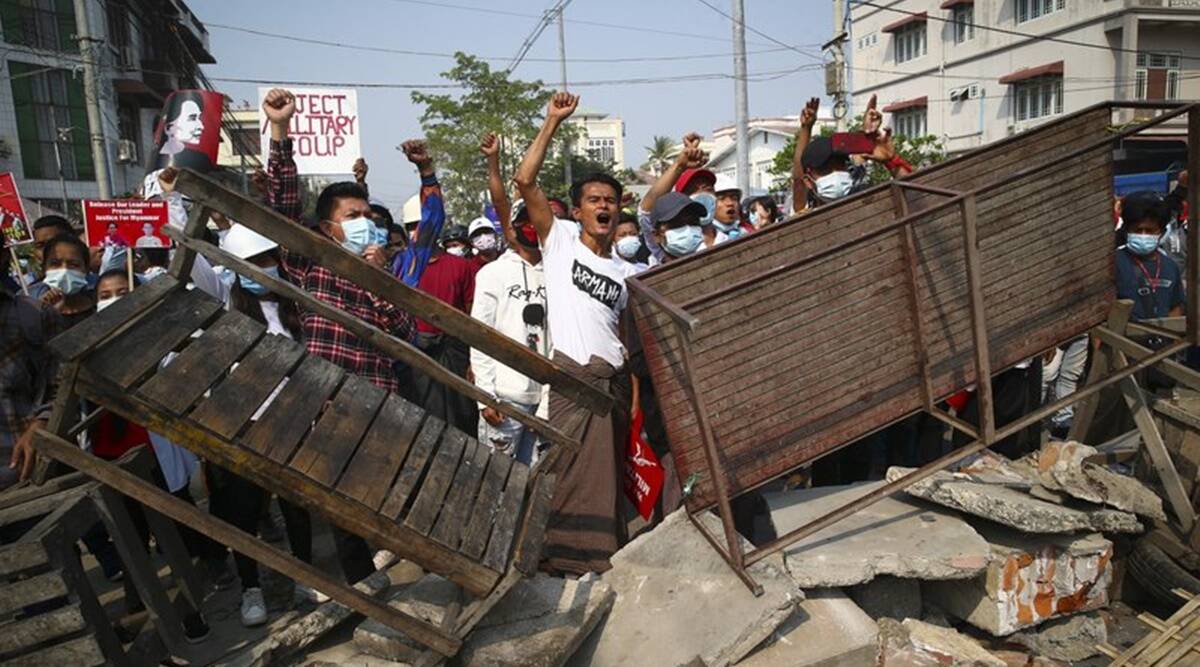
The UN Human Rights Office says they have received “credible information” that Sunday’s crackdown on anti-coup protesters in Myanmar has left at least 18 dead and more than 30 injured.
“The deaths reportedly occurred as a result of live ammunition fired into crowds in Yangon, Dawei, Mandalay, Myeik, Bago, and Pokokku,” he said in a statement, referring to several cities in Myanmar. “Tear gas was also reportedly used in several locations, as well as stun grenades and explosives.”
“We strongly condemn the escalation of violence against protests in Myanmar and call on the army to immediately stop the use of force against peaceful protesters,” said its spokesperson Ravina Shamdasani.
It would be the highest death toll in a single day among protesters demanding that the elected government of Aung San Suu Kyi returned to power after being overthrown in a coup on February 1.
Security forces in Myanmar carried out mass arrests and used deadly force on Sunday as they stepped up their efforts to break up the protests a month after the army staged a coup. At least four people were reportedly killed.
There were reports of gunfire as police in Yangon, the country’s largest city, fired tear gas and water cannons while trying to clear the streets of protesters demanding that the elected government of Aung San Suu Kyi be restored to power. Photos of live ammunition casings used in assault rifles were posted on social media.
Reports on social media identified by name a young man believed to have been killed in Yangon. His body was shown in photos and videos lying on a sidewalk until other protesters were able to take it away.
There was also a violent crackdown in Dawei, a much smaller city in southeastern Myanmar, where local media reported that at least three people were killed during a protest march. The deaths could not be immediately independently confirmed, although photos posted on social media showed an injured man being cared for by medical personnel, then lying on a bed under a blanket with flowers on top.
Confirming reports of protester deaths has been difficult amid the chaos and a general lack of news from official sources.
Before Sunday, there were eight confirmed reports of killings related to the army’s takeover of power, according to the independent Political Prisoner Assistance Association.
The February 1 coup reversed years of slow progress toward democracy after five decades of military rule. Suu Kyi’s National League for Democracy party would have been installed for a second five-year term in office, but the army prevented Parliament from meeting and detained her and President Win Myint, as well as other senior members. of the Suu Kyi government.
Sunday’s violence erupted early in the morning as medical students marched in the streets of Yangon near the intersection of the Hledan Center, which has become the rallying point for protesters who then head to other parts of the city.
Videos and photos showed protesters fleeing as police charged them and residents erecting makeshift barricades to slow their advance. Some protesters managed to throw tear gas canisters at the police. Nearby, residents pleaded with the police to release those they picked up on the street and put them in police trucks to be taken away. Dozens or more are believed to have been detained.
The protesters regrouped later Sunday and security forces continued to pursue them in various neighborhoods.
There was no immediate word on the Yangon victims. Gunfire sounds could be heard in the streets and there were what appeared to be smoke grenades thrown into the crowd.
“The clear escalation by the Myanmar security forces in the use of lethal force in various towns and cities across the country in response to mostly peaceful protesters against the coup is outrageous and unacceptable and must be stopped immediately,” said Phil Robertson, New York-based Human Rights Watch deputy director for Asia. “Live ammunition should not be used to control or disperse protests and deadly force can only be used to protect lives or prevent serious injury.”
“The world is watching the actions of the Myanmar military junta and will hold them accountable,” he said.
On Saturday, security forces began employing tougher tactics, taking preventive action to break up the protests and making dozens, if not hundreds, of arrests. Increased numbers of soldiers have also joined the police. Many of the detainees were taken to Insein Prison on the northern outskirts of Yangon, historically known for having political prisoners.
According to the Association for the Assistance to Political Prisoners, as of Saturday, 854 people had been detained, charged, or convicted at some point in connection with the coup, and 771 were detained or wanted for arrest. The group said that while it had documented 75 new arrests, it understood that hundreds of other people were also detained in Yangon and elsewhere on Saturday.

She is a freelance blogger, writer, and speaker, and writes for various entertainment magazines.