


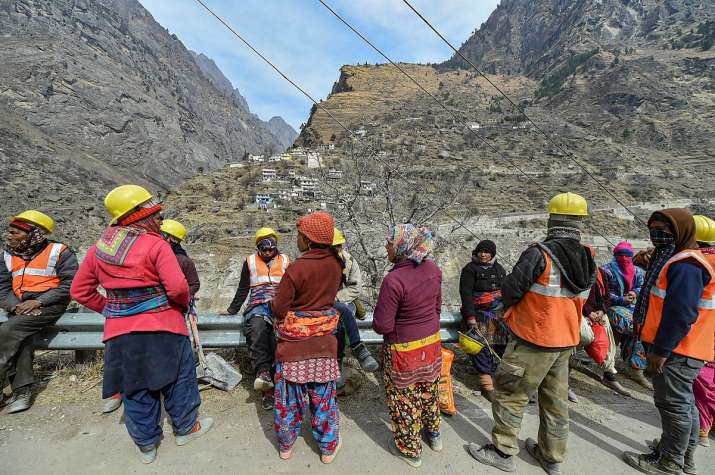
Chamoli: Locals helping with rescue and restoration work rest in the village of Raini, after a glacier explosion on February 7 in Joshimath triggered a flash flood in the Chamoli district of Uttarakhand.
Flash floods in Chamoli, Uttarakhand, have increased the turbidity of raw water drawn by Delhi from the Upper Ganges canal to “unprecedented levels” likely to affect water supplies in many parts of the national capital, the vice president said on Sunday. by DJB, Raghav Chadha. In a series of tweets, Chadha said that the Sonia Vihar and Bhagirathi water treatment plants were operating at reduced capacity. He said supply is likely to be affected in the south, east and northeast of Delhi and urged people to use water wisely.
“In the wake of the #UttarakhandDisaster, turbidity in raw water drawn by Delhi from the Upper Ganges Canal has risen to unprecedented levels (8000 NTU). As a result, @ DelhiJalBoard’s Sonia Vihar & Bhagirathi water treatment plants are currently operating at reduced capacity, “tweeted Chadha, who is also an Aam Aadmi Party (AAP) MLA.
The DJB is deploying water tankers in adequate quantities and every effort is being made to reduce turbidity in the water, he said.
“Turbidity is the measure of the relative clarity of a liquid. Turbidity is measured in nephelometric turbidity units (NTU). High turbidity can be caused by debris, silt, mud, algae, plant chunks, melted glaciers, sawdust , wood ash or chemicals in the water, “he tweeted.
Following a glacier breach in the Chamoli district of Uttarakhand, flash floods on the Dhauliganga and Alaknanda rivers caused massive destruction of life and property last week.
Chamoli District Magistrate Swati Bhadauria said 38 bodies were recovered from the flood-affected areas of Chamoli District, while 166 remain missing.
Rescue operations are still underway to save those trapped in the destroyed hydroelectric projects in the area.
Latest news from India
.

She is a freelance blogger, writer, and speaker, and writes for various entertainment magazines.