


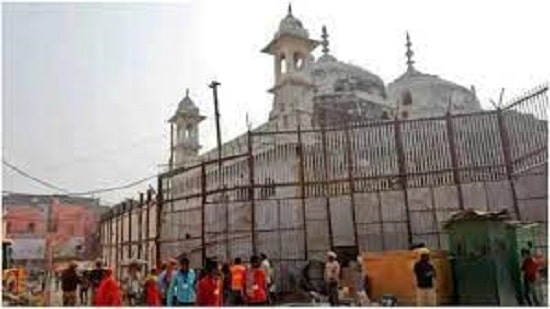
The All India Muslim Personal Law Board (AIMPLB) conducted an emergency meeting on Tuesday in the wake of the continuing controversy surrounding the Gyanvapi mosque in Varanasi, where accusations of a “Shivling” were discovered within the mosque during an inspection were made on Monday.
According to a source, since the case is before the court, the AIMPLB’s legal staff would provide essential help to the Muslim side. The virtual meeting lasted around two hours and included 45 members of the AIMPLB.
READ MORE: Soon After the CBI searches, Karti Chidambaram tweets, “I have lost count.”
“On Tuesday, we’ll go through the issues addressed and presented in court, and our legal experts will assist the Muslim side. Simultaneously, we would attempt to reach out to the public with information through pamphlets, books, and other means so that people are not misled, “According to IANS, a source said.
“We’d also want to hear the central government’s and other political parties positions on the Places of Worship Act of 1991,” the person stated. In 1991, then-Prime Minister P V Narasimha Rao introduced legislation concerning houses of worship.
Any house of worship that existed before August 15, 1947, is prohibited from being converted or altering its religious viewpoint under the legislation.
Anyone who tries to do so faces a fine and a sentence of one to three years in jail. The AIMPLB will conduct another meeting to deliver its full position on Wednesday.
Earlier on Tuesday, the Supreme Court ordered the Varanasi government to safeguard and shut the space within the Gyanvapi mosque complex where a ‘Shivling’ was discovered during a video scan and not to prevent Muslims from entering accessing the mosque to perform namaz.
“The place where the Shivling is discovered should be preserved,” a bench of Justices DY Chandrachud and PS Narasimha remarked. According to the ruling, Muslims visiting the mosque to give namaz or religious observances should not be subjected to any restrictions. The issue will be heard again on May 19 by the Supreme Court.
